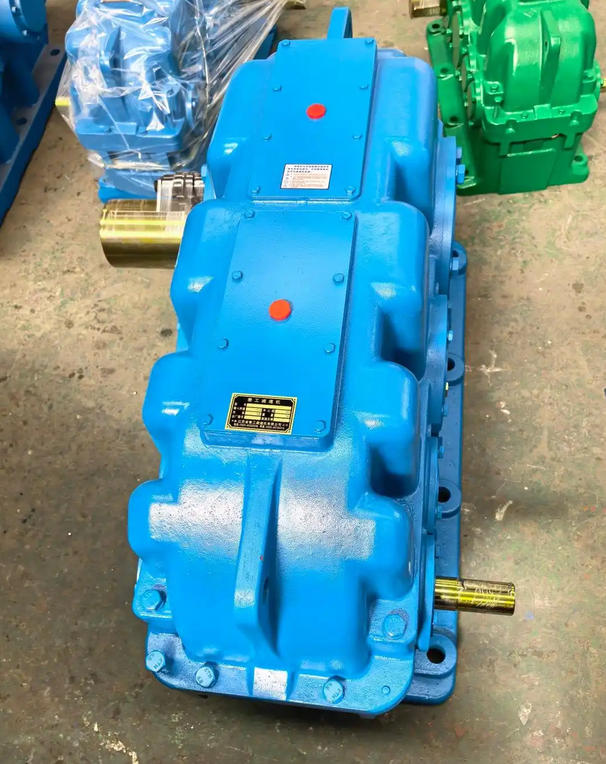

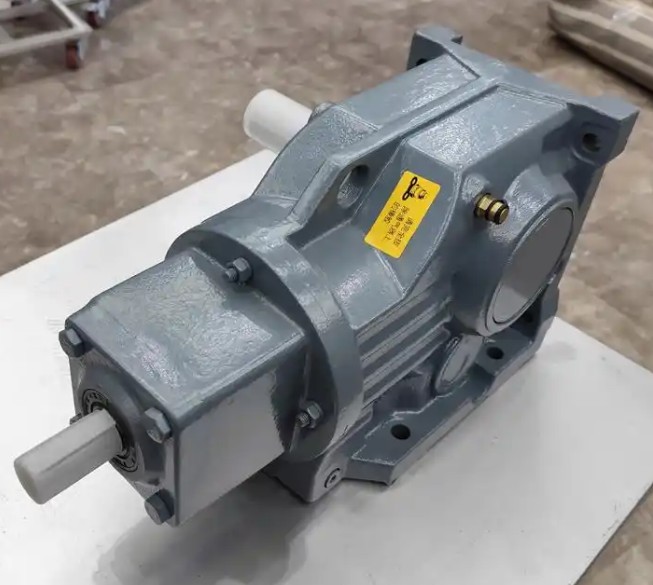
What are the common faults in the K77-Y11-4P-20.25 reducer splash lubrication system?
The K77-Y11-4P-20.25 reducer is a hard tooth surface model with a power output of 11kW and a transmission ratio of 20.25. It uses a splash lubrication system, and its faults are often related to oil level control, oil quality, installation posture, and component wear. The common faults and causes are as follows:1. Insufficient lubrication or excessive oil agitation caused by abnormal oil level
This is the most critical type of malfunction in the splash lubrication system.
Low oil level: If the oil level in the oil tank does not reach the standard of 1/3~1/2 of the tooth height of the low-speed gear, the amount of oil carried by the gear rotation is insufficient, and an effective oil film cannot be formed in the meshing area. This will lead to problems such as dry friction on the tooth surface and increased wear on the bearing raceway, manifested as increased operating noise of the reducer (sharp metal friction sound) and rapid temperature rise of the bearing end cover (exceeding 80 ℃). The main causes are insufficient oil filling during oil change, failure to replenish seals in a timely manner due to leakage, or loose oil drain plugs leading to oil loss.
Excessive oil level: When the oil level exceeds the standard upper limit, the resistance to stirring oil increases significantly during gear rotation, causing additional power loss, abnormal oil temperature rise (oil temperature exceeding 90 ℃ in a short period of time), and pressure rise inside the box, leading to oil seal and joint surface leakage faults. Commonly seen when manually adding lubricating oil without controlling according to the oil level gauge scale, or misjudging the oil level standard.
2. Lubrication failure caused by deterioration and pollution of lubricating oil
Splash lubrication does not have a forced filtration device, and the oil is prone to contamination and oxidation degradation, specifically manifested as:
Oil oxidation and deterioration: Long term high temperature operation and air mixing with oil can lead to a decrease in viscosity and an increase in acid value of lubricating oil, causing the oil color to turn dark brown or black, losing lubrication and heat dissipation capabilities, and causing tooth surface pitting and bearing bonding failures.
Oil pollution: Metal debris generated by gear wear, aging debris of seals, and external dust (entering through breathable plugs or sealing gaps) mixed into the oil, which circulates with the oil to wash the tooth surface and bearings, exacerbating component wear. In severe cases, gear jamming and bearing locking faults may occur. In addition, in humid environments, oil can absorb water and emulsify, resulting in whitening and layering of the oil, which can damage the stability of the oil film.
3. Lubrication unevenness caused by installation posture deviation
The splash lubrication system is designed to adapt to horizontal installation conditions by default. If the gearbox of this model needs to be installed at an angle due to on-site layout, or if the base is not leveled properly during installation, it will cause uneven distribution of oil in the oil pool, and the low-speed gear will be partially immersed in oil or even completely detached from the oil surface, resulting in insufficient local lubrication. Manifested as normal lubrication of high-speed gears, but abnormal temperature rise and accelerated wear of low-speed gears and output end bearings. In addition, if the oil level and oil guide structure are not rechecked during vertical installation, it will directly lead to gear oil failure and cause serious lubrication faults. If the force is too large, a large amount of oil mist will be generated, which will lead to high pressure in the box, leakage of seals, and increase of oil foam, affecting the formation of oil film.