
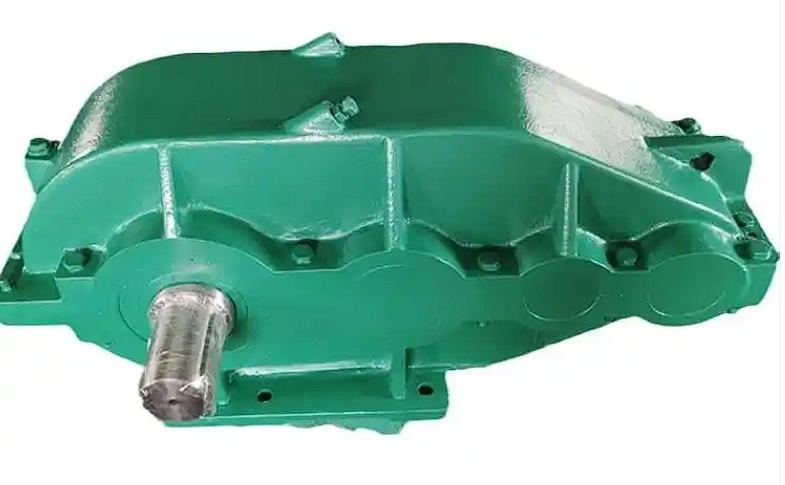
In addition to the frequency range, what other factors can affect the vibration detection results of the ZSC600-59-1 reducer housing
The following are the core factors that affect the test results:1. Measurement methods and instrument status
(1) Measurement point location and direction: The physical meaning of vibration varies in different directions (horizontal, vertical, axial). The measuring point must be as close as possible to the bearing bearing bearing area. If the measuring point is randomly selected (such as thin-walled casing, pipeline elbow), it will cause serious data distortion.
(2) The installation method of the sensor: whether the probe is firmly installed or held in the air will directly affect the transmission of high-frequency signals. Improper installation can lead to signal distortion.
(3) Instrument parameter settings: Improper selection of sampling parameters and range can directly lead to distortion of the collected signal or loss of key features.
2. Operating conditions
(1) The vibration performance varies greatly under no-load, light load, full load, or overload conditions. For example, long-term light load may lead to insufficient gear meshing and low-frequency vibration, while overload will sharply increase meshing force, causing mid to low frequency impact vibration.
(2) Speed and start stop: Speed fluctuations can change the meshing frequency of gears; Frequent start stop or downstream equipment jamming can generate impact loads, resulting in severe amplitude fluctuations.
3. Installation and basic conditions
(1) Alignment accuracy: If the coaxiality deviation between the input/output shaft and the motor or working machine is too large, additional radial forces will be generated, causing severe periodic vibrations.
(2) Basic rigidity and foundation state: Poor rigidity of the base, loose foundation bolts, or uneven gaskets can cause uneven stress on the box, and even trigger foundation resonance, amplifying overall vibration.
4. Equipment itself and lubrication status
(1) Internal component defects: gear wear, tooth breakage, bearing fatigue, or excessive assembly clearance can all generate specific impact vibrations, which are transmitted to the housing through the bearing seat.
(2) Lubrication condition: Improper viscosity of lubricating oil, insufficient oil volume, or emulsified and deteriorated oil can weaken the load-bearing and buffering capacity of the oil film, intensify friction and vibration.
5. External environment and crosstalk
(1) External vibration transmission: Adjacent heavy equipment (such as vibrating screens, crushers) or downstream equipment in the workshop may "transmit" vibration through a shared foundation or output shaft, which is superimposed on the vibration readings of the gearbox.
(2) Environmental temperature: Extreme temperatures can affect the viscosity of lubricating oil, thereby altering the thickness of the oil film and the smoothness of gear meshing.
Related News