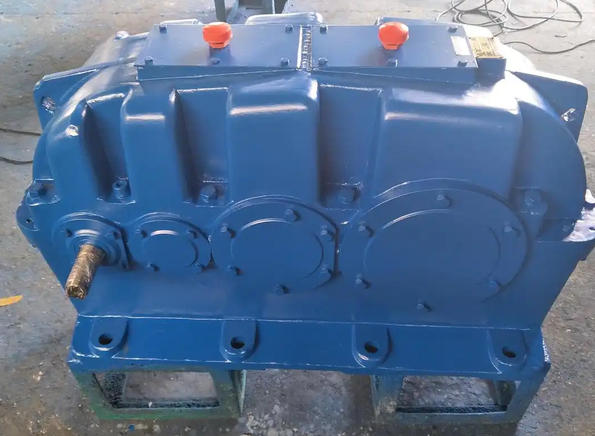


What Problems Occur When Motor and ZSY400-63-l Gear Reducer Connection Goes Wrong
Abnormal coupling between the motor and ZSY400-63-L gear reducer can trigger a chain of technical and safety issues. The most immediate impacts include reduced transmission efficiency, accelerated deterioration of critical components, and a sharp rise in unplanned downtime and safety incident risks. Based on field engineering experience and equipment operating characteristics, the detailed consequences are outlined below:
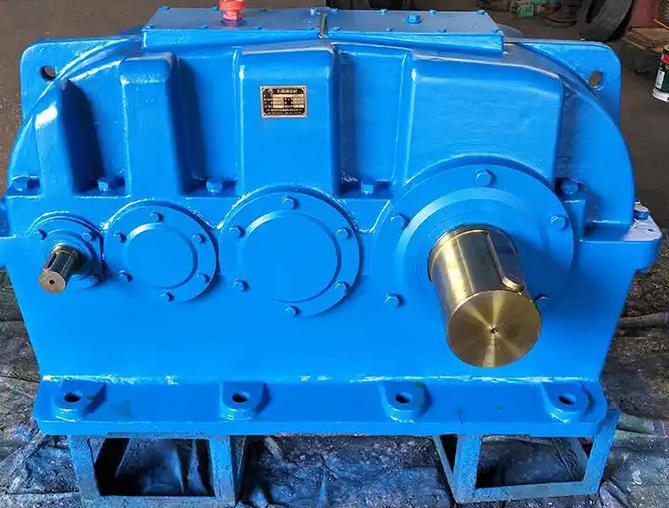
I. Accelerated Damage to Key Transmission Components
- Coupling system failure Misalignment or loose bolts cause rapid aging and fragmentation of coupling elastomers. Under alternating loads, pins and bolts suffer shear fracture. In severe cases, permanent deformation and cracking of the coupling body occur, resulting in total loss of power transmission.
- Shaft assembly and bearing damage Radial and angular misalignment introduces extra bending moments on the motor output shaft and reducer input shaft, leading to bending deformation at shaft ends. Meanwhile, bearings are subjected to uneven loading, which causes raceway fatigue spalling and cage breakdown. Temperature rises drastically, cutting bearing service life by more than half.
- Internal gear damage within the gear reducer Offset load on the input shaft transfers to high-speed gears, creating uneven force on meshing surfaces. This leads to pitting, scuffing and even tooth breakage, which may render the gear reducer unusable.
II. Degradation of Transmission Performance
- Significant drop in transmission efficiency Excessive connection clearance or misalignment increases friction and impact losses. The overall efficiency of the reducer may fall from the rated 96%~98% to below 85%. Symptoms include abnormal motor current, higher power consumption and reduced load capacity.
- Unstable speed and torque output Elastomer failure or keyway wear can cause slipping. The output speed fluctuates irregularly, with torque variation exceeding 15%, failing to meet process precision requirements.
- Severe vibration and noise Poor alignment easily induces resonance. Vibration velocity at the coupling exceeds the 2.8 mm/s limit specified by ISO 10816, and operating noise can reach over 95 dB, undermining equipment stability and creating industrial noise pollution.
III. Escalated Safety Hazards and Production Losses
- Unexpected shutdown and production losses Coupling rupture or shaft damage can stop equipment abruptly. Repairs may take days or weeks, halting production lines. Repeated startup and shutdown also create grid disturbance and affect adjacent machinery.
- Potential safety accidents Heavy vibration may dislodge coupling guards, exposing high-speed rotating parts and posing impact injury risks. Loosening or fracture of foundation bolts can even tip over the whole unit, resulting in serious safety incidents.
- Sharp increase in maintenance expenses Misalignment often leads to cascading component failures. Frequent replacement of elastomers, bearings, gears and other spare parts is required, alongside more frequent inspection work. The total lifecycle operating cost can rise by 30%~50%.
Related News