
What are the hazards of motor overload operation of BLD11-17-1.5KW cycloidal reducer
The overload operation of the motor supporting the BLD11-17-1.5KW cycloidal pinwheel reducer can cause a series of chain equipment damage, and in severe cases, may lead to the shutdown or even scrapping of the entire transmission system. The core hazards are concentrated in areas such as damage to the motor body, mechanical damage to the gearbox, lubrication and sealing failures, decreased system efficiency, and increased safety hazards.1、 Motor body damage: Overheating and burning is the biggest risk
When the motor operates under long-term overload, the current continues to exceed the rated value, and the copper consumption of the winding increases sharply (the heat generation is proportional to the square of the current), causing the motor temperature to rise rapidly:
Accelerated insulation aging: The lifespan of winding insulation materials is significantly shortened at high temperatures (such as over 130 ℃), and the lifespan of B-class insulation materials is halved for every 10 ℃ increase;
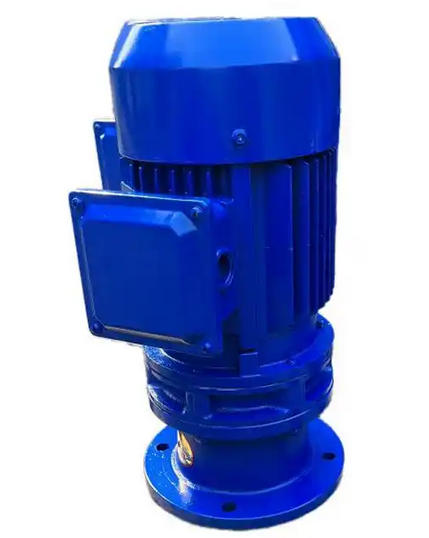
High risk of motor burnout: If the protective device is not activated in a timely manner or set improperly, the winding may experience short circuits or inter turn breakdown due to local overheating, ultimately leading to motor burnout;
Bearing overheating failure: The bearings at the front and rear ends of the motor are worn and locked due to the loss or drying of high-temperature lubricating grease, further increasing the load.
2、 Mechanical structure damage of reducer: gears and bearings are the first to suffer
Although the cycloidal pinwheel reducer has strong overload bearing capacity, long-term overload can still cause irreversible damage:
Gear tooth surface pitting and peeling: Overload causes the contact stress of the gear meshing surface to far exceed the design limit, which can easily lead to microcracks and develop into pitting, peeling, and even tooth breakage;
Accelerated wear of bearings: When the input and output shaft bearings operate under excessive fixed loads, the contact stress between the rollers and the raceway exceeds the standard, resulting in plastic deformation or fatigue peeling, and the service life is significantly shortened;
Clogging between cycloidal gear and needle gear sleeve: Under extreme overload, cycloidal gear may undergo slight deformation, resulting in abnormal fit with needle gear sleeve, causing jamming or eccentric wear.
3、 Lubrication and sealing system failure: triggering a vicious cycle
Accelerated aging of lubricating oil: Overload of the motor is transmitted to the reducer, causing an increase in the temperature of the casing, a decrease in the viscosity of the lubricating oil, a weakening of the antioxidant capacity, and a deterioration of the lubrication performance;
Seal failure and oil leakage: High temperature causes the rubber seal ring to harden and crack, leading to lubricant leakage and further damaging the lubrication environment, exacerbating wear and tear;
Pressure imbalance in lubrication system: Some forced lubrication systems cannot form effective oil film protection due to high oil temperature and decreased oil film strength, increasing the risk of dry friction.
Related News