
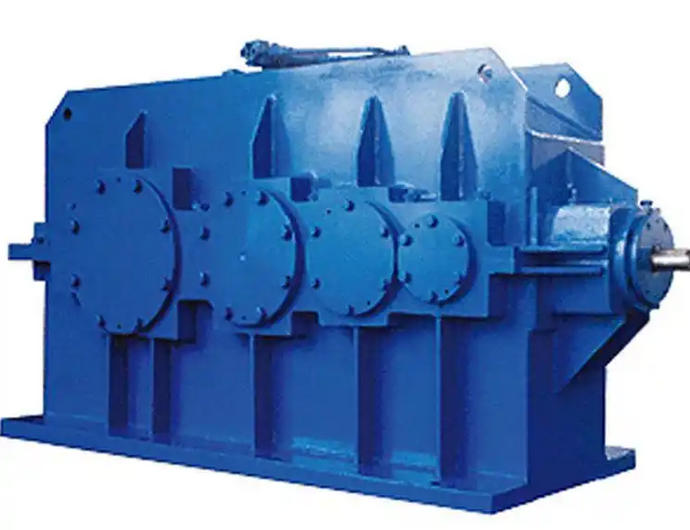
How to determine the optimal processing parameters for DFY400-180 gear reducer
In response to the reliable operation requirements of DFY400-180 gear reducer in high temperature and high humidity environments, the core of the optimal processing parameters lies in the use of a combination process of "carburizing quenching+low-temperature tempering+precision grinding" to ensure that the tooth surface hardness reaches 58-63HRC, while controlling the core toughness between HRC30-45, and strictly controlling the heat treatment deformation. Considering that you are located in Wuxi and concerned about high temperature and high humidity working conditions, it is recommended to strengthen the low-temperature tempering process to eliminate residual stress and prevent early failure caused by stress corrosion in humid environments.1. Setting of core heat treatment process parameters
DFY400 belongs to a four stage hard tooth surface conical cylindrical gear reducer, and its gear material is usually high-quality alloy steel forgings (such as 20CrMnTi or 20CrNiMo), which require deep carburizing to ensure load-bearing capacity.
Carburizing and quenching process:
Temperature control: It is recommended to control the carburizing temperature between 920 ℃ and 930 ℃ to ensure that the depth of the carburizing layer meets the modulus requirements (usually for large modulus gears, the carburizing layer needs to be deeper).
Cooling medium: Oil cooled quenching is used to obtain martensitic structure, ensuring that the tooth surface hardness reaches 58-63HRC (some high standard requirements can reach 62HRC or above).
Carbon potential accuracy: If conditions permit, a controlled atmosphere multi-purpose furnace is used to control the carbon potential accuracy within ± 0.05% to ensure the uniformity of the infiltration layer.
Key parameters for low-temperature tempering:
Temperature range: Low temperature tempering of 180 ℃ -200 ℃ must be carried out immediately after quenching.
Insulation time: It is recommended to keep warm for 2-4 hours. This step is crucial for high torque reducers like DFY400, as it can effectively eliminate quenching stress, stabilize the structure, prevent subsequent gear grinding or deformation during use, especially in high-temperature and high humidity environments that you are concerned about, and significantly improve stress corrosion resistance.
Cooling method: After tempering, slowly cool the furnace to 400 ℃ and then air cool it out of the furnace to avoid generating new thermal stress.
Precision machining coordination:
Grinding accuracy: After heat treatment, precision grinding must be carried out, and the accuracy level must reach level 6 or above of GB/T 10095.1 standard to correct heat treatment deformation, ensure smooth transmission and low noise.
2. Special optimization for high temperature and high humidity environments
Considering that the equipment will operate in a high temperature and high humidity environment, the following targeted adjustments need to be made to the conventional process:
Rust prevention and cleanliness control: Cleanliness and rust prevention treatment should be carried out immediately after heat treatment to prevent surface rust in high humidity environments.
Lubrication adaptation: Although it is not a heat treatment parameter, the use of medium load gear oil with high viscosity index and strong anti emulsification performance (such as L-CKC 220 or higher grade) should be considered when formulating the process. It is recommended to install a dry respirator at the ventilation cap of the reducer to prevent moisture from entering the box.
Related News