
What are the reasons for the wear of the worm gear tooth surface of WPWK80-40 reducer
The core causes of wear on the gear teeth of the WPWK80-40 reducer (with mostly copper alloy worm gears and alloy steel worm gears) can be classified into 10 categories, covering key dimensions such as lubrication, load, installation, and material, as follows:1. Improper lubrication: Failure to use special extreme pressure oil for worm gears (using ordinary gear oil), low/high oil level, deteriorated oil (containing impurities and moisture), or long-term failure to change oil, resulting in the failure of the tooth surface lubrication film and dry/semi dry friction wear.
2. Overload operation: Long term excessive fixed load (WPWK80-40 rated torque of about 250N · m), frequent start stop, impact load (such as hard start with load, emergency stop), causing the tooth surface contact stress to exceed the design limit, exacerbating wear.
3. Installation deviation: The perpendicularity between the worm gear and the worm wheel axis exceeds the tolerance (standard ≤ 0.02mm), and the meshing clearance is too large/too small (normal 0.15-0.3mm), resulting in unbalanced load or tooth biting, and excessive wear on the local tooth surface.
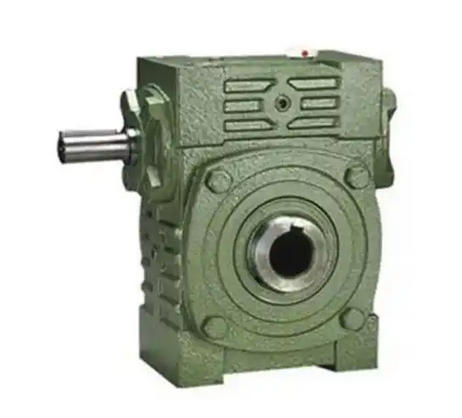
4. Impurities invade: During installation, the surface of the parts is not cleaned (residual iron filings, oil stains), and the operating environment is dusty/humid, causing impurities to enter the meshing surface and form abrasive wear (scratches and pitting on the tooth surface).
5. Unreasonable material matching: The purity of the copper alloy for the worm gear is insufficient (including impurities), and the surface hardness of the worm gear does not meet the standard (without nitriding treatment, hardness ≤ HRC55), resulting in a decrease in the wear resistance of the tooth surface.
6. High operating temperature: Poor heat dissipation (high ambient temperature, dust accumulation on the shell), deterioration of oil quality leading to increased frictional heating. When the oil temperature exceeds 90 ℃, the metal properties of the tooth surface decrease and the wear rate accelerates.
7. Frequent forward and reverse or reversal impact: Repeated reversal in a short period of time, with a short reversal interval (<3 seconds), results in alternating impact loads on the tooth surface, leading to contact fatigue wear.
8. Manufacturing precision defects: Worm gear tooth profile errors (such as excessive tooth surface roughness and tooth orientation deviation), which reduce the contact area during meshing and cause local stress concentration leading to wear.
9. Long term idle without maintenance: The equipment has been out of use for a long time, without oil injection or regular rotation of the worm gear. After the tooth surface rusts, the rust layer intensifies the meshing wear when restarted.
10. Improper operation: Failure to preheat without load during start-up (direct start-up with load), rough braking method (emergency stop causing tooth surface impact), damage to lubrication film and increase contact load, accelerating wear.