
What are the differences in no-load losses among different types of gear reducers
1、 Differences in no-load losses of different types of reducers1. Cylindrical/helical gear reducer
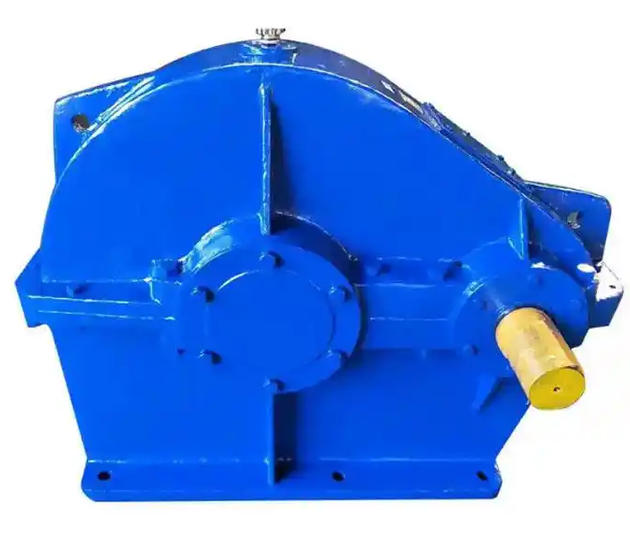
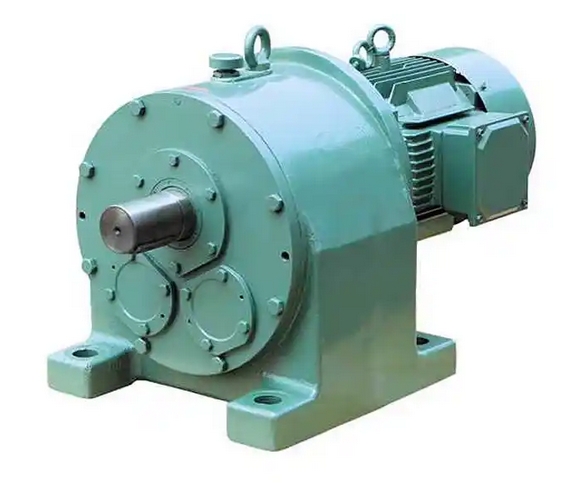
The structure is relatively simple with few rotating parts, and the no-load losses mainly come from bearing idle friction, oil seal lip sliding, and oil stirring. Due to the long tooth contact line and smooth meshing, helical gears have lower meshing losses than spur gears; But the herringbone gear structure is complex, and the assembly loss slightly increases.
2. Planetary gearbox
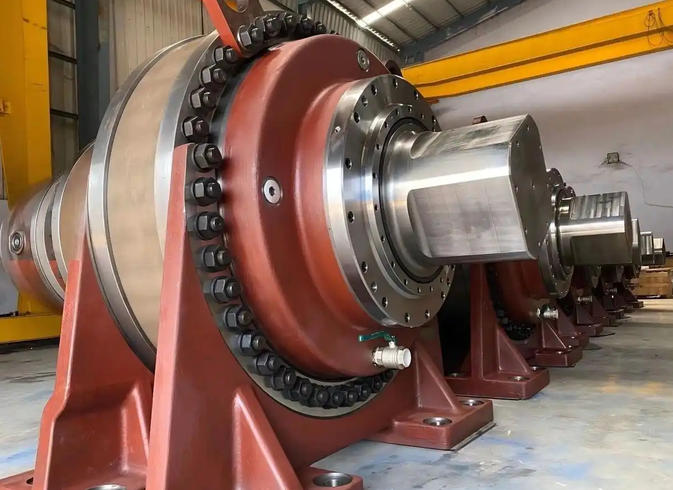
The main causes of no-load losses are often oil agitation and wind resistance. When the planetary gear system rotates at high speed in the oil pool, it agitates the lubricating oil and air, transferring kinetic energy to the fluid to form splashes and vortices, and ultimately converting them into thermal energy; The immersion depth, oil viscosity, rotational speed, and whether a guide plate is installed inside the box are all key influencing factors, which cannot be ignored in high-speed reducers. In terms of bearings, the rolling/spin sliding friction between the rolling elements and the raceway, combined with the viscous resistance of the lubricant, also constitutes the no-load part, and the oil stirring loss under high-speed conditions will become the main part of the bearing loss.
3. Worm gear reducer
Its uniqueness lies in its sliding friction property, which makes the sensitivity of friction work to load different from other models. Technical analysis suggests that when the load rate of the worm gear reducer is below 30%, the proportion of friction loss increases instead, and the transmission efficiency may be lower than 50%. This means that although there is no useful work output during no-load operation, the friction work between the tooth surfaces does not correspondingly decrease, and may instead exacerbate local wear due to insufficient lubrication. In addition, when unloaded, the oil temperature is low, the viscosity is high, and the splashing ability is insufficient. The upper worm gear tooth surface and the distal bearing may not receive effective lubrication for a long time; The problem of vertical installation is more prominent. When the machine is stopped, the oil flows back to the bottom of the box, and at the moment of startup, the gears are in a state of insufficient lubrication.
4. Cycloid pinwheel/RV/harmonic
RV is equivalent to a two-stage series connection of planets and cycloids. Although the second stage cycloid pin wheel is in rolling contact, eccentric motion causes several additional sliding frictions between the bearing and the pin hole, resulting in a lower efficiency than pure planets. Harmonics have an additional "internal friction": the flexible wheel is forced to deform twice by the wave generator every revolution, and internal friction is generated inside the material to convert mechanical energy into heat. This type of elastic hysteresis loss is not related to lubrication and accuracy - it still exists under no-load, which is the structural reason for its high no-load loss.
2、 Common variables affecting no-load losses
Rotational speed: As the rotational speed increases, the wind resistance and oil mixing loss increase exponentially, and the overall efficiency usually decreases with the increase of rotational speed.
Oil level and viscosity: Excessive viscosity increases stirring resistance, while insufficient viscosity prevents the formation of an effective oil film; Excessive lubrication (exceeding the rated value by 50%) under high-speed conditions can lead to oil mixing losses and a 2% to 3% decrease in efficiency.
Temperature: The optimal working temperature is usually between 30 ℃ and 70 ℃. If the temperature is too low, it will increase viscosity and stirring resistance, which will also reduce efficiency.
Sealing and series: Friction between the sealing element and the shaft, lip design, and clamping force all result in losses, and the cumulative effect is significant in multi-stage transmission.
Related News