
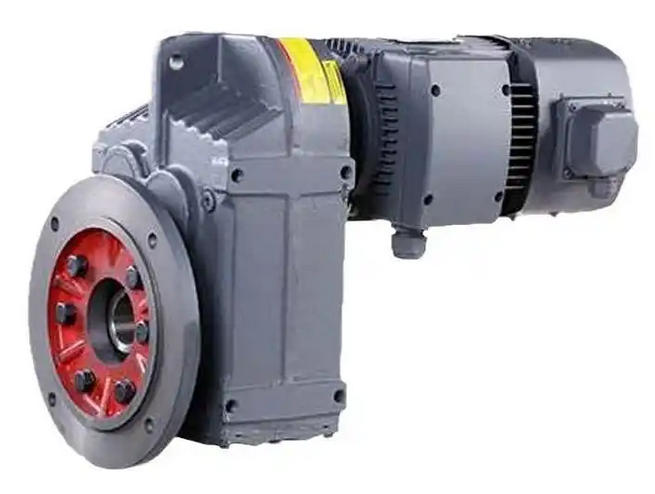
How to adjust if there is a conflict between the axial clearance and meshing spots of the FAF gear reducer
Prioritize ensuring that the gear meshing spots are qualified, and then fine tune the axial clearance to a reasonable range based on this.When there is a conflict between the axial clearance and meshing spot requirements of the FAF gear reducer, the gear meshing quality should be the primary adjustment goal. Because meshing spots directly affect transmission stability, noise, and lifespan, they are the core indicators of gear pair matching.
The specific adjustment steps are as follows:
1. Firstly, adjust the meshing spot: by applying red lead powder (or similar display agent) on the driving gear tooth surface, conduct meshing imprint testing and observe the contact area of the driven gear tooth surface. If the contact area is offset, too narrow, or discontinuous, the meshing state needs to be corrected by adjusting the axial position of the gear shaft system (such as adding or removing sleeve cups or end cap gaskets).
2. Further optimize the axial clearance: After ensuring that the meshing spots are qualified, check the axial clearance of the bearing. If the gap exceeds the recommended value (usually 0.05~0.1mm), it can be fine tuned by adjusting the floating end structure or pre tightening force, but it is necessary to avoid damaging the already adjusted meshing state.
3. Adopting compensation design: For high-precision scenarios, a dual thin gear+spring pre tensioning structure can be used to achieve "zero backlash" operation while absorbing axial displacement caused by thermal expansion, effectively coordinating the contradiction between the two.
Related News