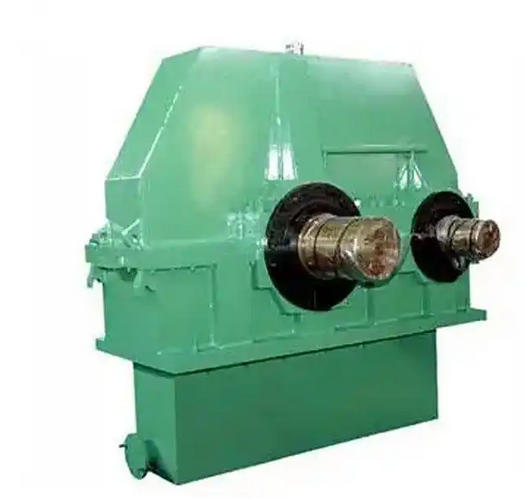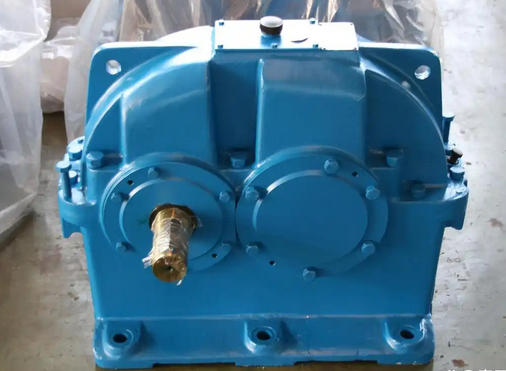

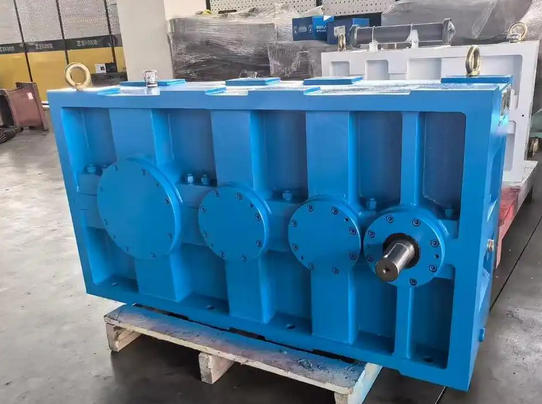
How to reduce the maintenance cost of ZLYJ112 hard tooth surface reducer
Optimizing design, strengthening lubrication management, and improving sealing performance are the core ways to reduce the maintenance cost of ZLYJ112 hard tooth reducer. Through scientific selection, standardized operation, and preventive maintenance, the frequency of downtime and component replacement can be significantly reduced, thereby lowering the overall lifecycle cost.1. Scientific lubrication management to reduce wear and energy consumption
Select suitable lubricating oil: Choose heavy-duty gear oil with high viscosity index and strong wear resistance (such as GL-5 grade) according to the working conditions, VG220~VG320), It is recommended to use synthetic oil in high-temperature environments to enhance oil film stability.
Regular inspection and oil change: Replace the lubricating oil after the first 300-600 hours of operation, and then replace it every 1500-5000 hours for a maximum of 18 months. Clean the magnetic oil plug when changing oil to prevent metal particle contamination.
Mixing of oil products is prohibited: Lubricants of different brands or types (especially mineral oil and synthetic oil) must not be mixed to avoid chemical reactions that may cause lubrication failure.
2. Strengthen sealing and cleaning protection to prevent contamination
Regular inspection of seals: Focus on the input/output shaft oil seal and the sealing gasket of the box joint surface, and replace them promptly if aging or cracking is found. In high humidity and dusty environments (such as sewage treatment and agricultural machinery), priority should be given to using high-temperature and corrosion-resistant sealing materials such as fluororubber.
Keep the equipment clean: Regularly clean the accumulated dust on the heat sink, ensure good ventilation, prevent excessive oil temperature caused by poor heat dissipation, accelerate oil degradation and seal aging.
3. Implement status monitoring to achieve preventive maintenance
Vibration and temperature monitoring: Regularly detect the amplitude of the transmission system using a vibration analyzer, and abnormal fluctuations indicate gear wear or bearing damage; Real time monitoring of oil temperature, if the temperature rise exceeds 40 ℃ or the oil temperature reaches 80 ℃ or above, the machine should be stopped immediately for troubleshooting.
Oil online monitoring: Install an oil monitoring device to track viscosity, moisture, abrasive particle concentration and other indicators in real time, achieving "oil change according to quality" instead of "oil change on time", and avoiding waste caused by excessive maintenance.
4. Improve assembly accuracy and extend component lifespan
Standardized installation process: Avoid hammering during disassembly and use specialized tools; When assembling the output shaft, pay attention to the tolerance fit (H7/k6 for D ≤ 50mm, H7/m6 for D>50mm), and apply anti adhesive to protect the hollow shaft.
Paired gear replacement: When replacing gears or worm gears, try to choose original parts and replace them in pairs to ensure meshing accuracy and avoid uneven stress caused by individual replacement.
5. Operation training and system construction
Establish a "five fixed" lubrication system: fixed point, fixed quality, fixed quantity, fixed time, and fixed personnel for lubrication management, ensuring that each equipment is responsible to a person.
Related News