
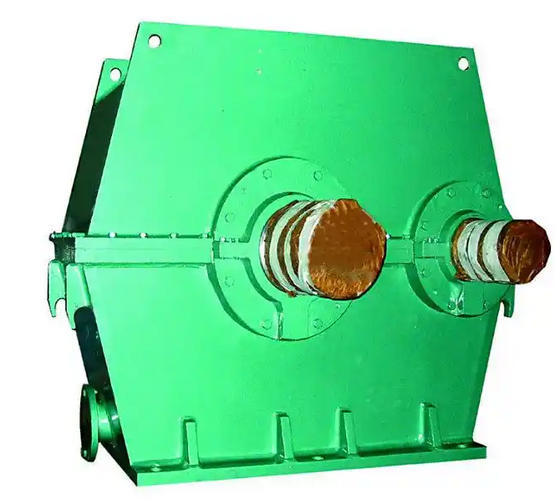
RV worm gear reducer for winding power, these adaptation misconceptions have been overcome by 90% of people
Misconception 1: Only focus on maximum torque and ignore actual load calculationWhen selecting, many people tend to fall into the misconception of "only looking at the maximum value", thinking that as long as the maximum output torque of the reducer is greater than the load, it is sufficient. In fact, the required torque must be accurately calculated by multiplying the actual load weight of the equipment by the friction coefficient. If a low specification model is mistakenly selected, it will cause the gearbox to operate under overload for a long time, which not only exacerbates the wear of the worm gear, but may even directly damage the equipment.
Misconception 2: Blindly believing in the "self-locking function"
RV reducers have self-locking characteristics under certain conditions (i.e. the worm gear cannot drive the worm in reverse), and are often used to prevent equipment from reversing. However, it should be noted that not all worm gears can self lock. Worm gears with multiple heads or large lead angles may not be able to achieve self-locking. If excessive reliance on self-locking and neglect the installation of additional braking devices in scenarios such as winding machines that require extremely high anti reverse requirements, it may cause serious safety hazards.
Misconception 3: Neglecting heat dissipation and thermal balance verification
Worm gear transmission mainly relies on sliding friction, so the transmission efficiency is relatively low (single-stage efficiency is about 0.7~0.9), and high heat is easily generated during operation. Many users neglect thermal balance verification when selecting equipment, resulting in excessive temperature rise after long-term continuous operation (generally requiring temperature rise ≤ 60 ℃ and oil temperature ≤ 80 ℃). High temperature not only causes the lubricating oil to become thinner, leading to oil leakage, but also accelerates the aging of seals and gear wear.
Misconception 4: Improper lubrication and maintenance or use of ordinary gear oil
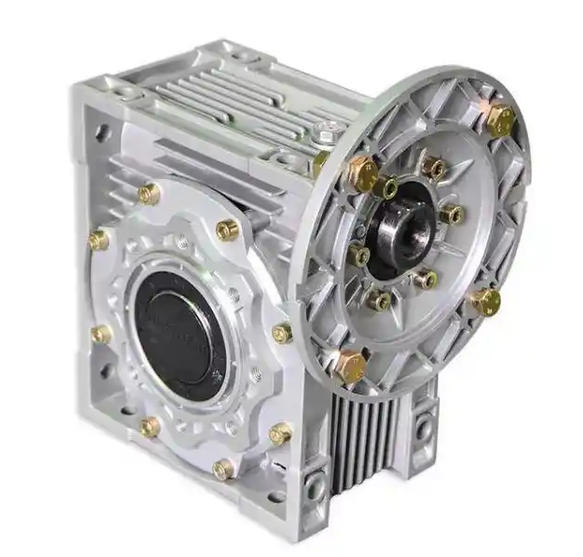
Worm gear reducers have extremely high requirements for lubricating oil and must use specialized worm gear oil (high viscosity, containing extreme pressure additives). The use of ordinary gear oil is strictly prohibited. In addition, the oil change cycle is also a critical area: the lubricating oil must be replaced after 300-500 hours (or 150-400 hours) of first use of the new machine, and then regularly replaced every 2000-4000 hours or six months thereafter. Lack of lubrication or incorrect oil products are the main reasons for equipment abnormal noise and rapid scrapping.
Misconception 5: Poor installation accuracy and eccentric stress
Although RV reducers can be installed flexibly, they have strict requirements for installation accuracy. If the center distance, perpendicularity, or axis alignment deviation between the prime mover and the reducer is too large, it will significantly affect the meshing efficiency and shorten the service life. At the same time, during installation, it is necessary to maintain horizontal coaxiality to avoid eccentric force, otherwise it may cause abnormal gear wear, abnormal noise, and heating.
Related News