
Locking plate and torque support: the "invisible guardian" of the external connection components of the roller press reducer
In the transmission system of the roller press reducer, the locking plate and torque support (or torque support) play a crucial role. They are not only the core link for transmitting power, but also the "invisible guardians" to ensure the stable operation of equipment under extreme working conditions.Jiangsu TaiGong reducer
Specializing in matters related to gearboxes and gearmotors
Free Consultation
1. Locking plate: a precision link without a key connection
The locking plate is the core component that enables keyless connection between the hollow shaft of the reducer and the roller shaft of the roller press. When the roller press is working, the output end of the reducer is connected to the small gear shaft through a locking plate.
This keyless connection method has significant advantages such as good neutrality, easy installation, and the ability to withstand alternating loads. During installation, it is necessary to ensure that the planetary carrier holes and roller shaft mating surfaces of the reducer are absolutely clean, free of any lubricating grease and impurities. Subsequently, by aligning the center of gravity, adjusting the level, and using tools such as hydraulic wrenches, the locking plate bolts are uniformly tightened in sequence until the inner and outer rings are flush, thus establishing an extremely reliable connection between the shaft and the hub.
2. Torque support: a shock absorber and defender that absorbs impact
When squeezing hard ores or clinker, the roller press often produces severe vibration and impact torque due to fluctuations in material particle size distribution or the inclusion of foreign objects. The torque support system is designed as a shock absorber and support device to address these challenges.
At present, torque support systems are mainly divided into forms such as spring torque support and single cantilever rigid support. Taking the common single support torque support system as an example, it usually consists of a torque disc, support rods, supports, and a base. The torque generated during the operation of the reducer is transmitted through a torque plate, and the two ends of the support rod are connected by joint bearings and pin shafts for rotation. This design is not only structurally stable, but also effectively absorbs the vibration of the reducer and adapts to the small horizontal movements of the reducer during operation.
3. Collaborative Protection: From Passive Endurance to Active Protection
The coordinated work of the locking plate and torque support is the cornerstone of the safe operation of the roller press transmission system. However, when faced with extreme emergencies such as the mixing of large pieces of scrap iron into the hopper causing the rolling to jam, relying solely on them may still not be sufficient to completely isolate the destructive force.
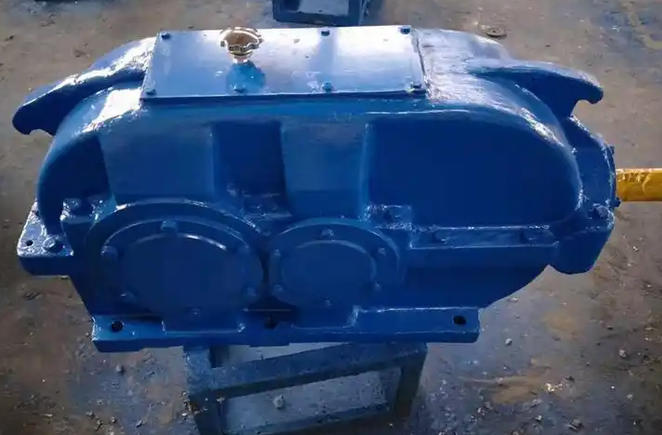
Therefore, modern roller press transmission systems will also be equipped with safety couplings as the ultimate line of defense. When the system torque exceeds the preset safety threshold, the safety coupling can accurately cut off power transmission within milliseconds, instantly isolate the rotational inertia of the motor and gearbox, and protect the gearbox from destructive overload damage.
In addition, with the continuous iteration of technology, the structure of torque support is also continuously optimized. For example, by changing the force state of the balance bar, the optimized torque support can avoid bending deformation of the torque plate at the extreme position and the overturning of the balance bar, greatly reducing the damage rate of spare parts and extending the full life cycle of the equipment. These precision components silently relieve internal stress in the system, silently guarding the efficient operation of the 10000 ton production line.
Related News