
What are the disadvantages of the three ring reducer
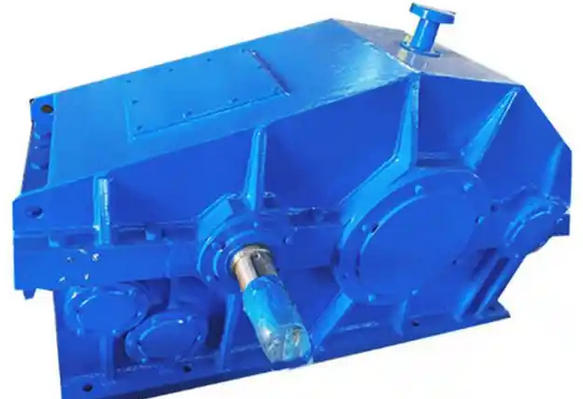
The main disadvantages of the three ring reducer are concentrated in high vibration and noise, high requirements for installation accuracy, and complex structure, which increases maintenance difficulty.1. High vibration and noise
Due to the use of three sets of low tooth difference internal meshing and four-bar linkage mechanism combined transmission, the three ring reducer is prone to periodic impact during operation, resulting in high vibration and noise. Especially in biased structures, it affects the working environment and may interfere with the operation of precision equipment. This type of noise is usually manifested as a "clicking" intermittent sound or a "buzzing" dull sound, which is related to poor gear meshing or the dead center of the four-bar linkage.
2. Extremely high requirements for manufacturing and installation accuracy
Due to its complex structure, the three ring reducer has very strict requirements for gear machining accuracy, eccentric shaft assembly error, and box hole spacing. Even small errors can cause tooth profile interference and uneven force transmission, leading to early wear or tooth breakage faults. If the coaxiality of the input/output shaft is not guaranteed during installation, it can easily cause oil seal wear, oil leakage, and even bearing damage.
3. High maintenance difficulty
Although the design supports disassembly and maintenance, fault diagnosis requires multidimensional judgment such as abnormal noise, temperature rise, and vibration spectrum, which heavily relies on the experience of technical personnel. For example, distinguishing between bearing damage and gear tooth breakage often requires stopping the turning machine, disassembling and inspecting, and even analyzing the oil sample. In addition, seal replacement and lubricant management also need to be operated in a standardized manner, otherwise oil leakage problems may occur repeatedly.
4. Limited heat dissipation performance, prone to overheating
Under high load continuous working conditions, if the lubrication system is poor or the ambient temperature is high, the gearbox is prone to an overall temperature rise exceeding the standard (>80 ℃), resulting in lubricating oil failure and accelerated wear of metal parts. Although some models can achieve an efficiency of 92% -96%, heat accumulation is still an issue that cannot be ignored.
5. The inherent dynamic imbalance risk of the three ring structure
If the three internal gear ring plates are subjected to uneven force or the inertia moment is not completely offset, it will cause additional vibration and affect the smoothness of transmission. This also limits its application in high-precision automation equipment
Related News