
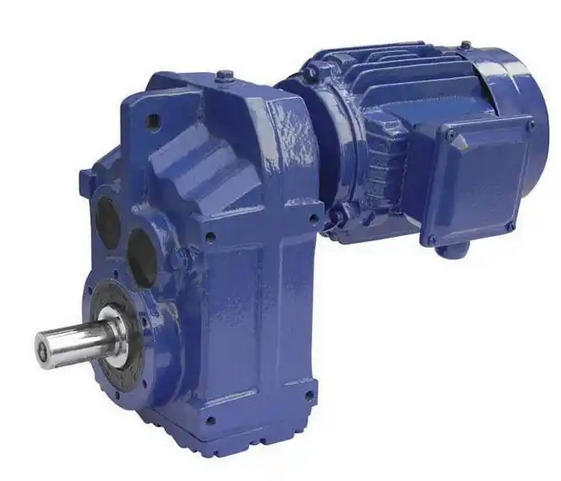
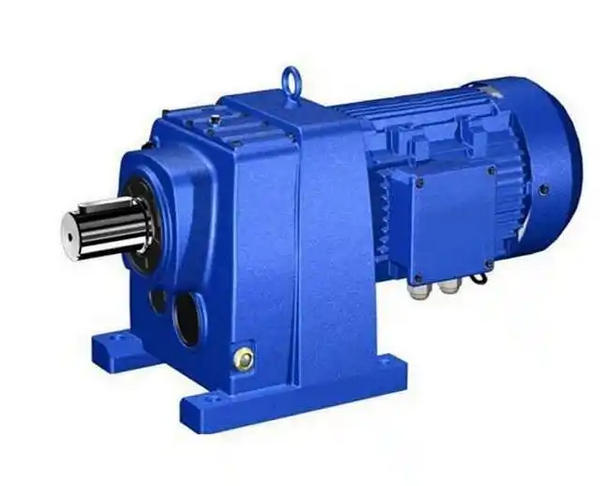
What are the methods to improve the overall efficiency of the R helical gear reducer
The practical methods to improve the overall efficiency of the R series helical gear reducer are as follows:1、 Selection and structural level
1. Optimal minimum number of transmission stages
Priority should be given to selecting fewer stages for the same speed ratio: single-stage>two-stage>three-stage. For each additional stage, there will be more gear meshing and multiple sets of bearing losses. The fewer stages, the higher the inherent efficiency.
2. Reasonably match the transmission ratio to avoid hard fitting of super large speed ratios
Do not choose the extreme high speed ratio within the same class, as a high speed ratio will increase tooth slip loss and significantly reduce efficiency; It can be split into two stages to replace the three-level high speed ratio.
3. Choose high-precision hard tooth surface models
The R series teeth are selected for precision machining, carburizing and quenching of hard tooth surfaces. The tooth surface roughness is low, the meshing slip is small, and the efficiency is 2% to 4% higher than that of ordinary shaving soft tooth surfaces.
4. Standard high-quality low friction bearings
Choose high-precision rolling bearings and low clearance energy-saving bearings, replace ordinary miscellaneous bearings, and reduce bearing rolling friction losses.
2、 Lubrication optimization (with the most significant improvement in efficiency)
1. Match the correct viscosity lubricating oil
Select ISO VG150/VG220 industrial gear oil according to the operating temperature, and the viscosity should not be too high or too low: if the viscosity is too high, the oil mixing loss will increase dramatically, and if it is too small, the oil film failure will increase friction.
2. Strictly control the standard oil level
Just add the oil level to the centerline of the oil mirror: if the oil level is too high, the gear will experience a sudden increase in oil stirring resistance, high heating, and a sharp drop in efficiency; The oil level is too low and the lubrication is insufficient, resulting in increased friction loss.
3. Regularly change oil and maintain clean oil quality
Timely replacement of aged, emulsified, and impurity containing oil products, deterioration of lubricating properties of deteriorated oil, increased dry friction of gear bearings, and continuous decline in efficiency.
4. Control the normal working oil temperature
Maintaining an oil temperature of 60-80 ℃ is optimal. If the oil temperature is too high, viscosity will decrease and the oil film will break; The oil temperature is too low and the oil is too thick, resulting in significant oil loss when stirred.
3、 Installation and assembly process
1. Priority horizontal standard installation
Horizontal lubrication cycle is optimal, with low axial load and minimal oil mixing loss; The efficiency of vertical installation is naturally low, and it is necessary to strictly control the oil level and oil supply.
2. Ensure the coaxiality between the motor and the reducer
The coupling is precisely aligned, and excessive deviation can result in biased loads, forced gear meshing, additional bearing loads, and significantly increased additional losses.
3. Ensure the parallelism of the gear shaft and compliance with assembly clearances
Poor assembly accuracy leads to uneven tooth surface loading, excessive local wear, increased friction loss, and accompanied by heating and abnormal noise.
4. Reasonably assemble the sealing components to avoid over tightening and pressure fitting
Do not force the skeleton oil seal too tightly, reduce the friction resistance of the shaft neck, and lower the power loss caused by the seal