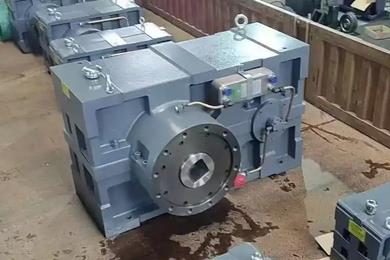

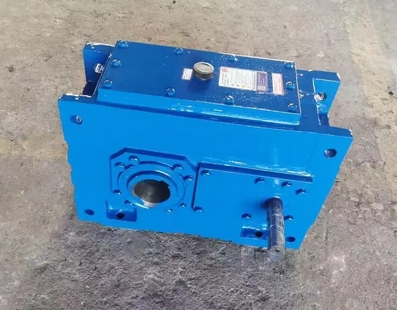
The core advantages of CNC bending machine reducers, essential components for automated production
The core advantage of the CNC bending machine's reducer lies in its ability to accurately convert the motor's high-speed rotation into the low-speed, high-torque required by the equipment, significantly enhancing system control precision and operational stability. As the "transmission heart" of automated production lines, it has become an indispensable component for high-end metal processing equipment, with its core strengths primarily reflected in the following aspects:1. Ultimate machining precision and positioning control
The bending machine imposes extremely high requirements on the repeatability and backlash control of the transmission system. Precision reducers (such as planetary reducers or harmonic drives) can maintain backlash at an extremely low level (e.g., less than 1 arc minute or even at the micrometer level), effectively eliminating transmission errors. This ensures high consistency in bending angles, keeping bending errors within an extremely narrow range and significantly reducing the scrap rate of workpieces.
2. Powerful torque amplification and impact resistance
Metal bending is a typical heavy-duty impact working condition. The gearbox amplifies the motor torque through a high reduction ratio (e.g., 1:50 to 1:100), delivering low-speed, high-thrust output to effortlessly handle bending requirements for large-sized, thick plates. Meanwhile, its high-strength alloy steel gears and multi-tooth meshing design endow the equipment with exceptional impact resistance and high rigidity, ensuring stable operation under heavy loads.
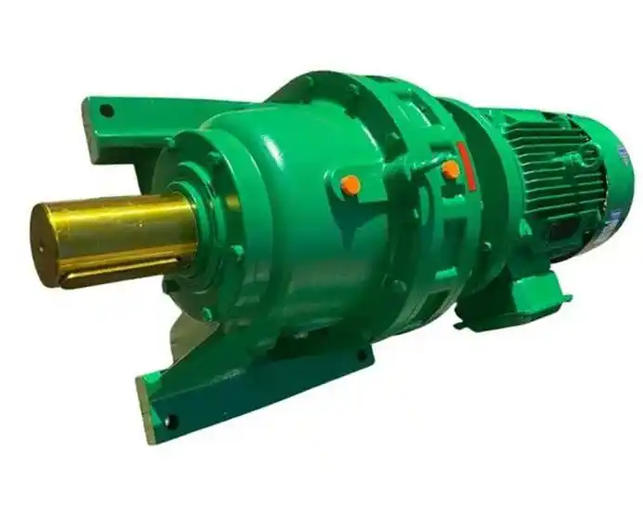
3. Efficient Power Transmission and Energy Conservation
Modern CNC bending machines (especially pure electric bending machines) widely adopt the "servo motor + gear reducer + lead screw" direct-drive solution, eliminating the energy conversion process of traditional hydraulic systems and boosting power transmission efficiency to over 90%. This structure not only offers extremely fast response speeds but also significantly reduces equipment energy consumption (achieving up to 70% energy savings) while completely eliminating the pollution risks associated with hydraulic oil leaks.
4. Enhance equipment rigidity and long-term stability
High-quality gearboxes feature an integrated design and high-strength materials, paired with precision bearings, significantly reducing operational vibrations and noise. This high-rigidity structure not only effectively buffers mechanical stress during start-stop cycles, extending motor and overall equipment lifespan, but also ensures the device maintains micron-level precision without degradation during prolonged, high-load continuous automated production.
5. Flexible Adaptation and Automated Collaboration
The compact size and high power density of the gearbox make it ideal for space-constrained automated equipment. In automated bending robots or multi-axis collaborative systems, it ensures millisecond-level motion synchronization, enabling seamless sheet feeding, bending, and part retrieval, supporting 24-hour unmanned production line operation. Additionally, some new dual-speed gearboxes can automatically switch reduction ratios, balancing rapid reciprocation with slow working feed to further reduce costs and improve efficiency.
In summary, the gear reducer of a CNC bending machine is not merely a simple component for speed reduction and torque amplification, but also a core hub that determines the precision, efficiency, and stability of automated sheet metal processing.
Related News