
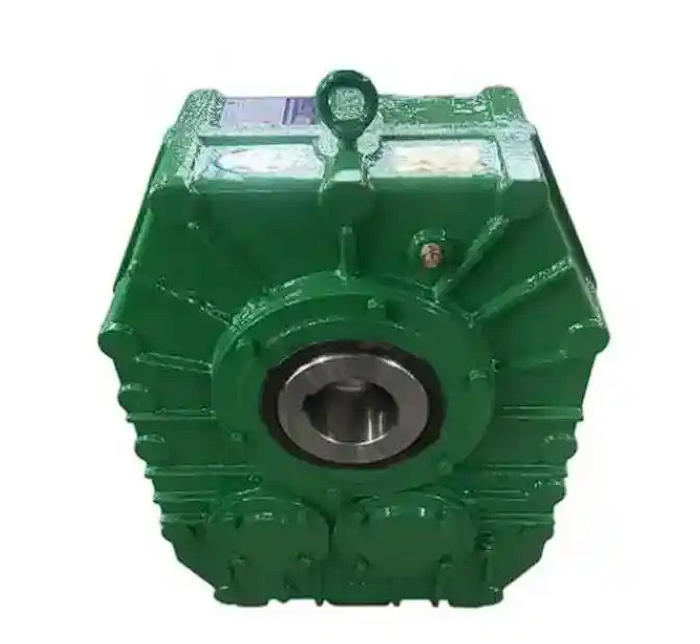
What are the common mistakes in the installation of the ZJY125-11.2 reducer
1、 Violent assembly errorsDirectly hammering the gearbox housing or shaft end: When installing, using a hammer to strike the hollow shaft or housing end face can cause the bearing cage to shatter, the hollow shaft inner hole to deform, and subsequent torque transmission cannot be normal.
Direct assembly without cleaning the mating surface: There are residual burrs, welding slag, and old oil stains in the hollow shaft holes of the host spindle and reducer. Forcefully pushing them in will scratch the mating surface, causing slipping and insufficient output torque during operation.
Single side tightening of cone sleeve bolt: Failure to tighten the double end cone sleeve in diagonal steps during connection can cause deformation of the hollow shaft due to unilateral force, and even lead to loosening and slipping of the cone sleeve during operation.
2、 Alignment and gap type errors
The accuracy of shaft alignment seriously exceeds the standard: without calibration with a dial gauge, it is only aligned with the naked eye, with a radial deviation exceeding 0.1mm and an angular deviation exceeding 0.08mm/m. After operation, periodic severe vibration and rapid heating and wear of bearings will occur.
Axial clearance reservation error: The clearance between the host shaft shoulder and the output shaft end face of the reducer is less than 3mm. During operation, the shaft shoulder hits the end cover, causing poor heat dissipation and overheating of the check valve; If the gap exceeds 5mm, axial movement will occur, impacting the internal gear meshing surface.
The levelness of the foundation does not meet the standard: the concrete foundation was installed before curing for 28 days, and the levelness deviation exceeded 0.1mm/m. During operation, the machine body tilts, and additional bending moments are formed between the input shaft and the motor shaft, resulting in a significant reduction in bearing life.
3、 Installation error of auxiliary components
Incorrect installation position of anti twist rod: The rod is installed on the side of the reducer away from the working machine, which will introduce additional bending moment to the main spindle of the host, causing the spindle to bend and deform.
Non elastic buffering structure of the pull rod: No rubber elastic body is installed between the pull rod and the fixed support, and torque fluctuations are directly transmitted rigidly. During operation, the box is repeatedly impacted, and the anchor bolts frequently loosen.
The initial tension of the V-belt is too high: the belt is tensioned to a point where the finger presses down and the displacement is less than 1mm. The input shaft bearing is subjected to excessive cantilever tension, and after running for hundreds of hours, bearing pitting and abnormal noise may occur.
4、 Lubrication and debugging errors
Incorrect amount of lubricating oil added: Failure to add N220 medium extreme pressure gear oil according to the centerline of the oil window. If the oil level is too high, it will cause the internal oil temperature of the box to soar rapidly and the oil seal to leak oil; If the oil level is too low, there will be insufficient lubrication of the gears, resulting in dry grinding and tooth damage.
Omitting the steps of no-load trial operation: After installation, operate directly with full load without conducting a 2-hour no-load inspection to identify potential hazards such as abnormal noise, vibration, and oil leakage. This can easily lead to overload damage to the gear meshing surface before it is fully engaged.
First oil change timeout: If new oil is not replaced after running for more than 600 hours, residual metal abrasive particles from assembly will circulate with the oil and scratch the gear tooth surface, causing irreversible tooth wear.
Related News