
What impact will gearbox failure have on milling machines
As the core component of the milling machine transmission system, the gearbox, once malfunctioning, will directly cause a series of serious impacts on the machining accuracy, equipment status, and production safety of the milling machine. The specific impact is mainly reflected in the following aspects:1. Severe decrease in machining accuracy
Size and shape errors: Internal gear wear or excessive clearance (backlash) in the reducer can cause periodic changes in transmission ratio, resulting in radial and axial runout of the output shaft. In milling processing, this can directly lead to tool path deviation, resulting in machined parts with dimensional deviations, rough surfaces, and even significant positioning drift.
Inaccurate repeat positioning: For CNC milling machines, gearbox failures can seriously affect the repeat positioning accuracy of the worktable, resulting in extremely poor consistency of mass-produced products.
2. Abnormal vibration and noise (generating vibration patterns)
Surface vibration pattern: Gear wear, tooth breakage, or abnormal meshing clearance can generate strong impact and low-frequency micro amplitude vibration during operation. This vibration will be directly transmitted to the spindle or worktable, causing obvious ripples or vibration patterns on the surface of the milled workpiece, seriously affecting the surface smoothness.
Sudden increase in noise: The faulty decelerator will make periodic "clicking" or intense "clanging" sounds, significantly increasing the noise level and deteriorating the working environment in the workshop.
3. Decreased transmission efficiency and equipment overheating
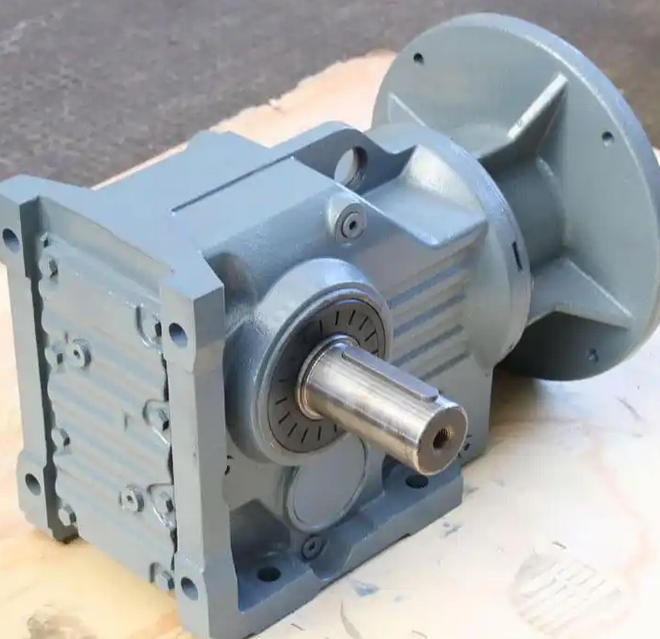
Increased energy consumption: Gear wear can lead to increased frictional resistance on the tooth surface, resulting in a significant decrease in transmission efficiency (such as dropping from over 95% to below 85%) and causing energy waste.
Rising oil temperature: Energy loss will be converted into heat energy, causing a rapid increase in the temperature of the gearbox lubricating oil (over 80 ℃), accelerating the oxidation and deterioration of the lubricating oil. At the same time, a small gap or damaged bearings can also cause abnormal overheating of the mechanical parts.
4. Causing damage to chain machinery
Secondary damage to components: Metal fragments generated by gear cracking can mix into the lubricating oil, contaminating the entire lubrication system and causing scratches, wear, and other precision moving parts such as bearings and shafts.
Shortening equipment lifespan: Worn gears generate additional radial forces and impact loads, accelerating bearing raceway wear and even causing stress concentration, cracking, or oil leakage at the box support, significantly reducing the overall lifespan of the machine.
Related News