
How to Determine Whether the Installation of the BWD Series Cycloidal Gear Reducer is Proper
1、 Prepare for inspection before installation1. Environment and foundation: Ensure that the installation environment is clean and free of debris. The reducer must be installed on a horizontal and stable foundation or base, which should be able to bear the full weight of the reducer and avoid vibration during operation.
2. Component inspection: Carefully clean and inspect all disassembled components to confirm that there is no damage, deformation, or excessive wear. Special attention should be paid to checking whether the cycloidal gears are paired, that is, the bearing holes, ten holes, and external tooth profiles of the two cycloidal gears can completely overlap.
3. Lubrication preparation: Confirm that the reducer has been filled with the appropriate type and sufficient amount of lubricating oil or grease as required. New reducers usually have no oil when they leave the factory and need to be refilled according to the instructions.
2、 Accuracy check during installation process
1. Axis alignment: This is the most crucial step. The alignment error of the transmission center axis shall not exceed the allowable compensation amount of the coupling used. Poor alignment is the main cause of vibration, noise, and premature bearing damage.
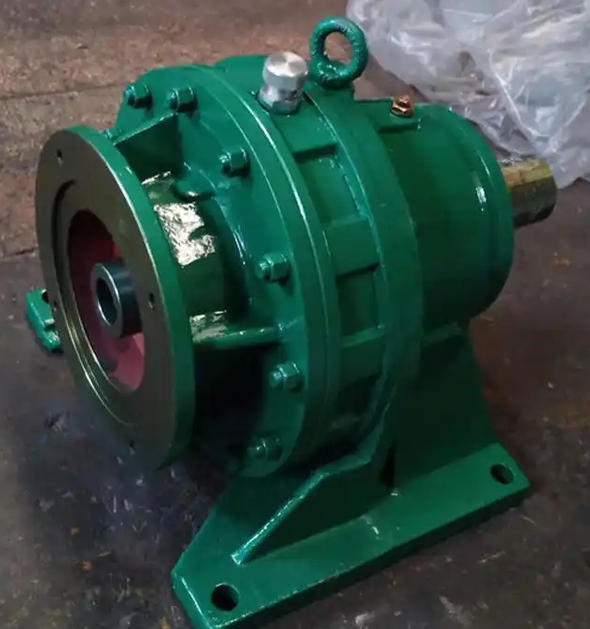
2. Installation of cycloidal gear:
Ensure that the markings of the two cycloidal gears are offset by 180 ° before installing them into the eccentric bearing.
After installation, rotating the input shaft by hand should feel flexible, smooth, and free of jamming or swinging. This is the most direct method to determine whether the internal meshing is correct.
3. Installation of connectors: When installing couplings, pulleys, and other components on the output shaft, direct hammering is strictly prohibited. The shaft end screw holes and bolts should be used to press the components in by applying uniform tightening force to protect the internal precision parts.
4. Horizontal and Vertical: When installed horizontally, the horizontal inclination angle of the reducer should generally be less than 15 °. Vertical installation should ensure verticality and strictly prevent the oil pump from cutting off oil.
5. Fasteners: All anchor bolts and connecting bolts should be tightened in stages according to the principle of "diagonal progressive" to ensure uniform force distribution and prevent deformation of the machine body.
3、 Trial operation inspection after installation
After installation, a trial run must be conducted for final verification.
1. Trial operation time: The no-load trial operation time should not be less than 2 hours.
2. Operating status standard:
Stability: Smooth operation without abnormal vibration.
Sound: No abnormal noise or impact sound. The no-load noise should usually be ≤ 78dB (A).
Sealing: There is no oil leakage at each sealing point.
Temperature: After stable operation, the temperature rise should be ≤ 35K (or 40K, according to specific standards), and the temperature difference between various parts of the machine should not be significant.
4、 Long term operation status monitoring
The gearbox installed in place should maintain stability during long-term operation.
If any abnormalities are found during trial operation or subsequent operation, such as increased vibration, noise, high temperature, or oil leakage, the machine should be stopped immediately for inspection, and all aspects of the installation process should be re examined until the problem is resolved.
Related News