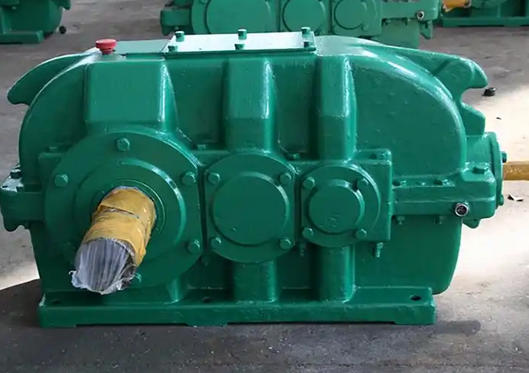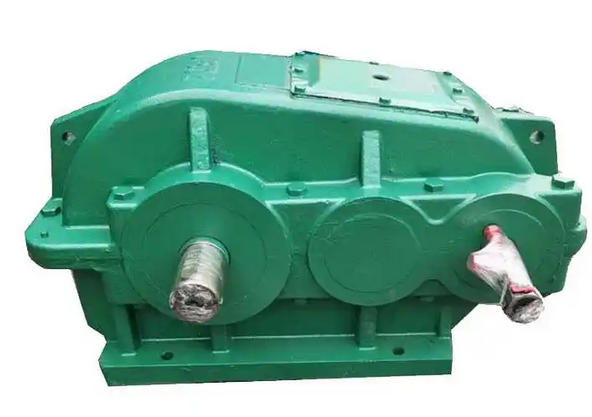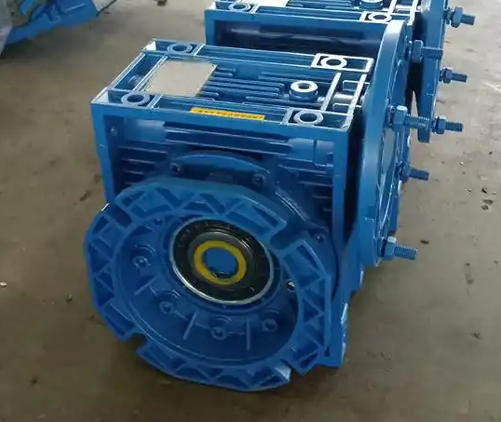

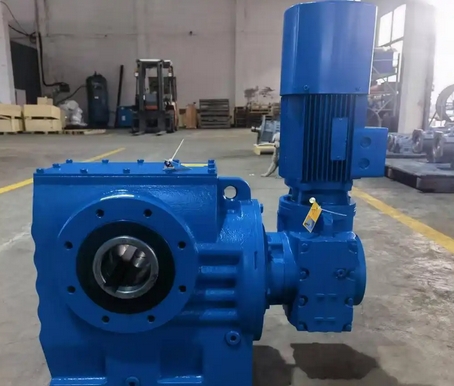
What are the specific structural auxiliary measures of CWS200-12.5-SZ worm gear reducer?
The structural auxiliary measures of CWS200-12.5-SZ worm gear reducer mainly include improving transmission accuracy, improving lubrication conditions, enhancing heat dissipation performance, and ensuring sealing reliability, aiming to improve the operational stability and service life of the equipment under complex working conditions.1、 Optimize tooth profile design to enhance meshing performance
The CWS series adopts the Nieman type cylindrical worm drive, and its core structural advantage is reflected in the precise matching of the tooth profile shape.
Circular arc tooth surface grinding processing: The worm gear is ground to significantly improve the smoothness and geometric accuracy of the tooth surface, and reduce the sliding friction coefficient during the meshing process.
Convex concave tooth profile meshing mechanism: The worm gear has a convex surface and the worm wheel has a concave surface, resulting in a larger contact area and more uniform stress distribution, effectively improving load-bearing capacity and reducing local wear.
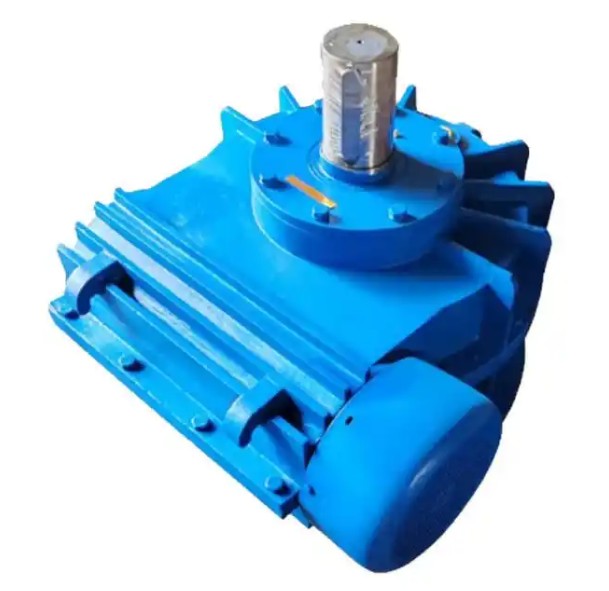
Increasing the angle of circumferential velocity: This design is beneficial for forming a stable fluid dynamic pressure oil film, improving lubrication conditions, and slowing down tooth surface fatigue failure.
2、 Strengthen the lubrication system to ensure continuous oil film formation
Good lubrication is the key to reliable operation of worm gear reducers, and CWS200-12.5-SZ supports efficient lubrication through structural design.
Oil bath lubrication adaptation structure: The box design ensures that the worm gear part is immersed in lubricating oil, achieving self-sufficient lubrication and suitable for medium and low-speed working conditions.
Reserved forced lubrication interface: For high load or continuous operation scenarios, an oil pump circulation system can be installed to directly spray cooled clean oil into the meshing area, improving heat dissipation and anti-wear effects.
Oil level and drainage convenience design: equipped with clear oil indicators, high-level vent holes, and low-level drain plugs for easy daily maintenance and oil product replacement.
3、 Strengthen heat dissipation capability and control temperature rise
Due to the relatively low efficiency of worm gear transmission, a large amount of energy is converted into thermal energy, which requires structural means to assist in heat dissipation.
Install heat dissipation ribs on the outer surface of the box: increase the contact area with air, improve the efficiency of natural convection heat dissipation, and prevent lubrication failure caused by high oil temperature.
Expandable air or water cooling device: Some models reserve installation positions and support external fans or oil coolers, suitable for high temperature environments or heavy-duty continuous operation conditions.
4、 Improve the sealing protection level to resist external pollution
In order to adapt to harsh environments such as dust and humidity in industrial sites, multiple sealing measures are taken in key parts of the gearbox.
Double layer sealing structure at the shaft end: using a combination of skeleton oil seal and labyrinth seal, effectively preventing dust from entering and lubricating oil leakage.
Respirator design: When the pressure inside the box changes, a filtering respirator can balance the air pressure while blocking the entry of moisture and particulate matter.
Related News