

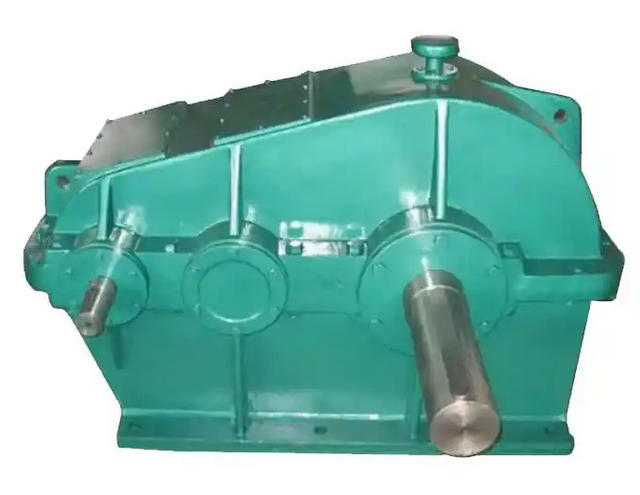
How to choose the appropriate ZL35-8-1 soft tooth surface reducer helix angle to reduce noise
The recommended helix angle for ZL35-8-1 soft tooth surface reducer is between 8 ° and 15 ° to effectively reduce operating noise. This range can balance the meshing smoothness caused by the increase in coincidence and the vibration problems caused by the increase in axial force.When the helix angle increases, the gear meshing becomes a progressive contact, the coincidence degree increases, and the impact and vibration are significantly reduced, thereby reducing noise. Experimental data shows that for every 5 ° increase in helix angle, the noise at the meshing frequency can be reduced by 3-5 decibels. However, if the helix angle is too large (exceeding 15 °), it will generate significant axial thrust, increase bearing load and friction vibration, and may actually increase noise.
In addition, to achieve lower noise, the following design optimizations need to be coordinated:
1. Gear accuracy: Increasing gear accuracy to level 7 or higher can significantly reduce impact noise caused by errors in tooth pitch, tooth profile, etc.
2. Tooth profile modification: perform tooth tip edge and tooth flank drum correction to avoid tooth tip interference and edge contact during meshing, and reduce high-frequency whistling.
3. Materials and Heat Treatment: Alloy steel is carburized, quenched, and polished to improve tooth surface hardness and smoothness, reducing friction noise.