
What are the considerations for selecting WP worm gear reducers under different operating conditions
1、 Select based on load characteristicsStable and light load conditions (such as small conveyors and ordinary mixers): The service factor is taken as 1.2-1.3, and the standard cast iron shell WP foundation series is preferred. The minimum machine base size can be selected upwards according to the calculated torque, without the need for additional specification enlargement.
Medium impact conditions (such as lifting platforms and packaging machinery): The service factor is taken as 1.3-1.5. It is recommended to use WPX reinforced structure, with the worm gear treated by carburizing and quenching, and the worm gear made of high-strength tin bronze, which has stronger impact resistance.
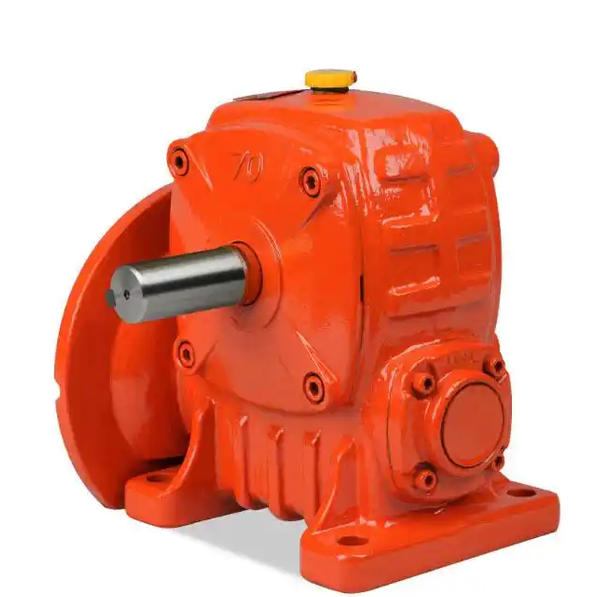
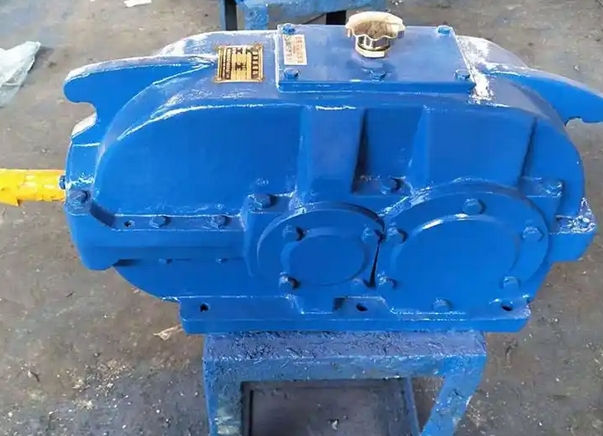
Heavy impact and heavy load conditions (such as mining auxiliary equipment and heavy-duty mixing equipment): When the service factor is increased to 1.5-2.0, WPD split type box or hard tooth surface reinforced WP reducer is preferred to avoid rapid wear of the tooth surface caused by long-term impact.
2、 Select by operating mode
Continuous 24-hour operation condition: It is necessary to focus on checking the thermal power to ensure that the input power of the motor does not exceed the upper limit of the thermal power marked on the reducer sample; In high ambient temperature scenarios, it is necessary to choose a cooling fan or directly increase the size of the first stage machine base to prevent excessive temperature rise from causing lubricating oil failure.
Frequent start stop intermittent working conditions: It is necessary to additionally verify the peak starting torque to avoid instantaneous impact exceeding the rated load limit of the gearbox. The machine base number can be appropriately enlarged to reserve redundancy and prevent pitting corrosion on the worm gear tooth surface.
Low speed and high speed ratio working condition: When the speed ratio exceeds 50, the transmission efficiency will decrease to 65% -70%, and the heating will significantly increase. It is necessary to prioritize the two-stage transmission WPE series and optimize the lubrication scheme to avoid insufficient lubrication during long-term low-speed operation.
3、 Select based on installation and spatial conditions
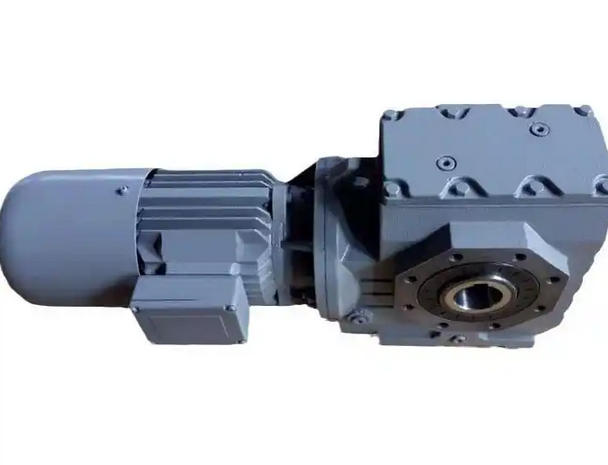
Conventional horizontal installation: WPA/WPS series is preferred, as the oil pool lubrication is more sufficient when the worm is placed below, and the maintenance cost is the lowest. It is suitable for more than 90% of general industrial scenarios.
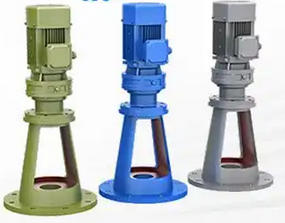
Vertical/output shaft vertical working condition: WPDO/WPO series with dedicated thrust bearing set must be selected to optimize the splash lubrication path and avoid dry grinding of the top of the worm gear due to lack of oil. It is forbidden to directly use ordinary horizontal reducers for forced vertical installation.
Compact working condition: Optional aluminum alloy shell WP-E series, lightweight, fast heat dissipation, while retaining sufficient load-bearing capacity, suitable for scenarios with strict space limitations such as food packaging machines and clean workshops.
4、 Select according to special environmental conditions
Working conditions with high dust/humidity/corrosion: Priority should be given to models with double lip skeleton oil seals and labyrinth seals, with a protection level of IP55 or above, to prevent foreign objects from entering the box or lubricating oil leakage.
Working conditions with large temperature difference between high and low temperatures: Choose a wide temperature range compatible model, verify the temperature compatibility of lubricating oil and seals in advance, and use low-temperature special lubricating grease for environments below -20 ℃ to avoid excessive starting resistance caused by grease solidification.
Require anti reverse self-locking conditions: prioritize models with a speed ratio of ≥ 30 for more reliable static self-locking performance; Note that self-locking may fail in dynamic impact and strong vibration environments, and cannot completely replace mechanical brakes. Additional safety braking devices need to be installed.
Related News