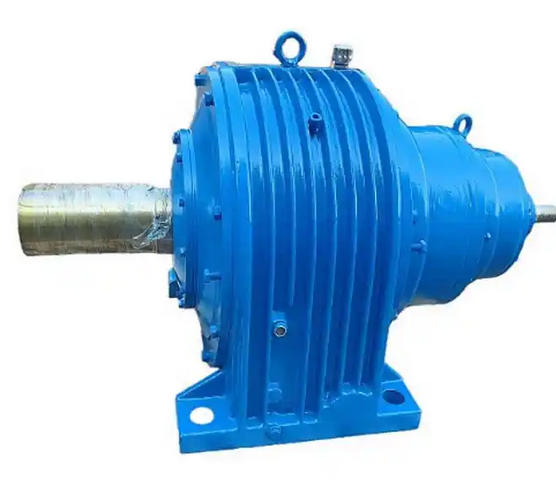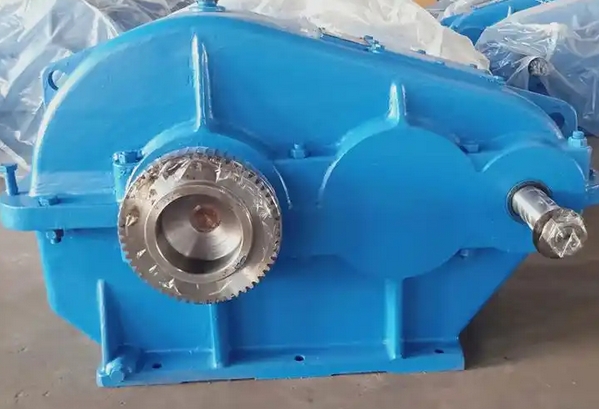

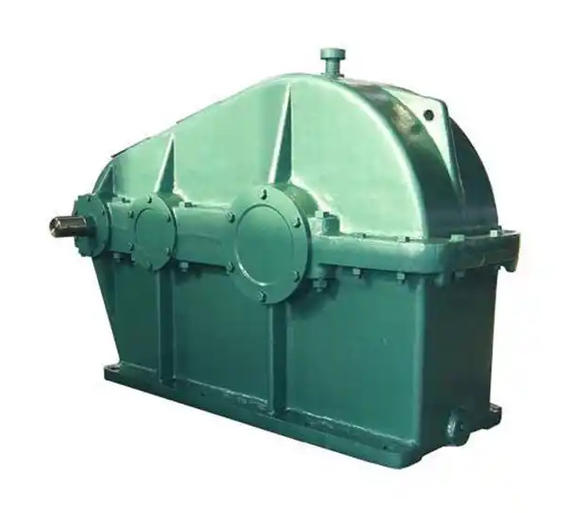
Does the replacement cycle of lubricating oil affect the power of ZL series soft tooth surface reducers
1、 Core Impact MechanismThe transmission loss increases, and the effective output power is consumed: lubricating oil that has exceeded its service life will oxidize and deteriorate, generating sludge and gum. Either the viscosity is too high, greatly increasing the gear oil stirring resistance, or the viscosity is too low, unable to form a stable oil film, resulting in a sudden increase in meshing friction resistance. The transmission efficiency can be reduced by 2% to 5%, and a large amount of input power is consumed by ineffective losses, ultimately resulting in a significant decrease in the actual available power of the output shaft.
Oil film failure, compression of rated load capacity: After long-term use of the oil, the extreme pressure anti-wear additive is exhausted, and the tooth surface cannot form an effective protective film. Direct contact with the metal causes wear and pitting, and the equipment cannot operate stably at rated power for a long time. When overloaded, there is even a risk of bonding, and forced load reduction operation is necessary. The actual maximum power that can be transmitted is greatly compressed.
Oil temperature out of control triggers overheating and power reduction protection: The heat dissipation ability of deteriorated oil is significantly reduced, and the heat generated by friction cannot be carried out in a timely manner. After the oil temperature continues to rise above 80 ℃, the strength of the oil film further weakens, forming a vicious cycle of "high temperature lubrication failure higher temperature", ultimately triggering motor thermal protection and forcing the equipment to automatically reduce power operation.
2、 Key points of power guarantee for compliant oil change
Strictly follow the standard oil change cycle of ZL series soft tooth surface reducers: the new machine has a running in period of 500-700 hours for the first change, the continuous working system changes oil every 6 months or 2500-3000 hours, the intermittent working system changes oil for up to 12 months, and the oil change cycle is directly reduced by half in harsh environments such as dust, humidity, and high temperature.
Regularly monitor the status through oil analysis: When the viscosity of the oil changes by more than ± 15% of the new oil, the acid value increment exceeds 1.0 mgKOH/g, and the moisture content is greater than 0.5%, even if it has not reached the preset cycle, the oil must be changed immediately to avoid abnormal power attenuation.
Related News