
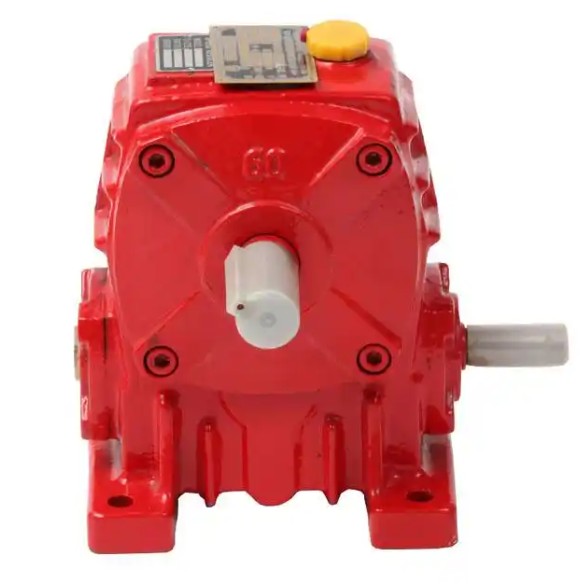
What is the frequency of testing the sealing performance of the soundproof cover of WPA120-40 worm reducer?
The testing frequency of the sealing performance of the sound insulation cover of WPA120-40 worm gear reducer should be comprehensively judged based on the equipment operating environment, working condition intensity, and maintenance objectives. In conventional industrial applications, it is recommended to conduct systematic testing every 3 months, which is the optimal cycle after balancing maintenance costs and equipment reliability.1、 Suggestions for detection frequency under different working conditions
Standard operating conditions (clean workshop environment, continuous operation)
Testing frequency: once every 3 months
Description: Suitable for most factory workshop scenarios, it can promptly detect issues such as aging seals and loose fasteners, preventing noise leakage and dust intrusion.
Adverse working conditions (high dust, humidity, large temperature fluctuations)
Testing frequency: once a month
Explanation: For casting, metallurgy, or outdoor equipment, sealing materials are prone to accelerated aging, and it is necessary to increase inspection frequency to prevent lubrication pollution and structural corrosion.
Low load or intermittent operating conditions
Testing frequency: once every 6 months
Explanation: The equipment has few starts and stops, minimal impact of thermal expansion and contraction, and slow changes in sealing performance. The detection cycle can be moderately extended.
2、 Suggestions for testing content and methods
Visual inspection: Check the surface of the soundproof cover for deformation, cracks, and whether the sealing strip has fallen off or hardened.
Differential pressure assisted judgment: During operation, observe whether there is oil mist seeping out from the gap of the cover, indirectly reflecting the risk of internal positive pressure and seal failure.
Confirmation of fastener status: Check whether the bolts and pressure blocks are loose, especially in installation positions with high vibration.
Performance evaluation of sealing materials: Conduct elasticity testing on rubber sealing strips and replace them if necessary.
3、 The prerequisite for extending the detection cycle
If high-performance sealing materials (such as silicone gaskets) are used, a condition monitoring system (such as vibration+temperature linkage alarm) is equipped, and historical data is stable, the cycle can be extended to 4-6 months after risk assessment, but the effectiveness needs to be verified for two consecutive cycles after the first adjustment.