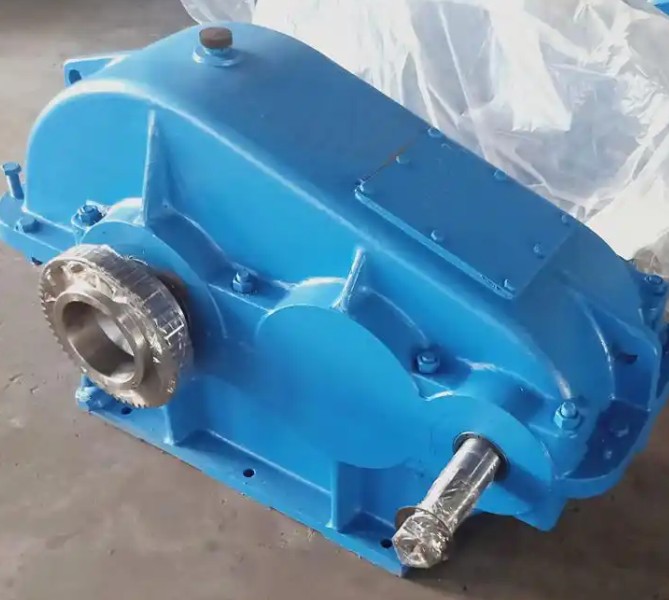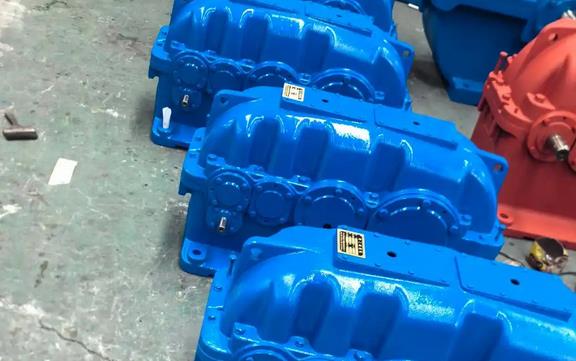

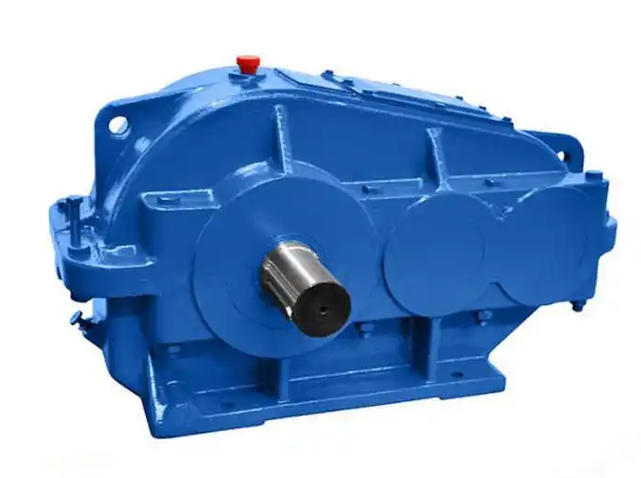
How to deal with the emergency after the ZLYJ180-16 reducer gear breaks
After the gear fracture of ZLYJ180-16 reducer, systematic emergency measures should be taken immediately to prevent the fault from expanding, protect related components, and buy time for subsequent maintenance. The following is a graded disposal plan based on industrial site practice, prioritizing safety and production continuity.1、 Immediate shutdown and safety isolation
Cut off the power immediately and hang a "Do Not Start" warning sign to prevent secondary damage caused by misoperation.
Wait for the input/output shaft to come to a complete stop (about 5-10 minutes), then turn off the upstream and downstream linkage devices to avoid inertial load impact.
Clean up oil stains and metal fragments on site, take fire and anti slip measures, and ensure the safety of maintenance personnel.
2、 Preliminary fault assessment
Without disassembling, determine the degree of tooth breakage and its impact range through the following steps:
Observation hole inspection: Check the position of the broken teeth (driving wheel/driven wheel), quantity (single tooth/multi tooth), and whether there are any fragments remaining inside the box.
Manual turning inspection: Slowly rotate the input shaft to feel for any jamming or abnormal noise, and preliminarily determine whether the bearings are damaged or other gears are affected.
Condition confirmation: Clarify whether it is a critical production line equipment, the duration of shutdown, and whether there is a backup unit to determine the subsequent processing strategy.
3、 Scenario based emergency response plan
Scenario 1: Temporary emergency operation (applicable to short-term recovery needs)
When only a single tooth edge is broken, there are no large fragments, and production cannot be interrupted, the following measures can be taken to maintain low load operation for ≤ 24 hours:
Clean up internal metal residue: Use a magnetic rod to suck out broken tooth fragments, and then rinse the meshing area with kerosene to prevent scratching other tooth surfaces.
Polish the edge of the broken tooth: Use an angle grinder with a fine grinding wheel to remove sharp burrs and avoid damaging the paired gear.
Load and speed limit operation: Reduce the load to 50% -70% of the rated value, decrease the speed by 20% -30%, and prohibit frequent start stop.
Strengthen monitoring: Check temperature (≤ 85 ℃), vibration (RMS ≤ 7.1mm/s), and abnormal noise every 1-2 hours, and stop immediately if there is any abnormality.
Scenario 2: On site emergency repair (with repair capability and the ability to shut down for 4-8 hours)
Suitable for situations where the tooth breakage area is ≤ 1/3 and the gear body has no cracks, it is recommended to use one of the following methods:
Tooth inlay repair method
Process dovetail grooves at the root of the broken teeth, embed stainless steel gear blanks, bond them with high-strength structural adhesive and fix them with fixtures. After curing for 24 hours, shape and polish them until smooth meshing. Suitable for working conditions with low load and low speed.
Partial welding repair
Preheat the broken tooth area to 200-300 ℃ using E5015 welding rod, then perform argon arc welding as the base layer and manual arc welding filling. After welding, keep warm and cool slowly, and then finely grind according to the original tooth profile to ensure uniform meshing clearance (0.15-0.25mm).