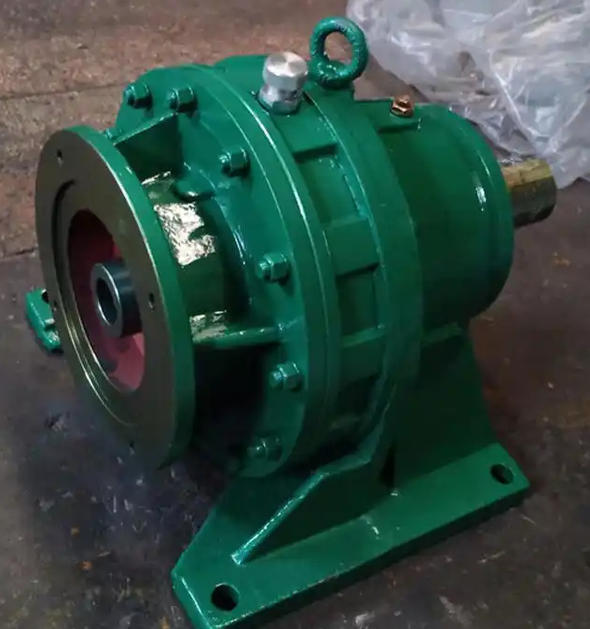

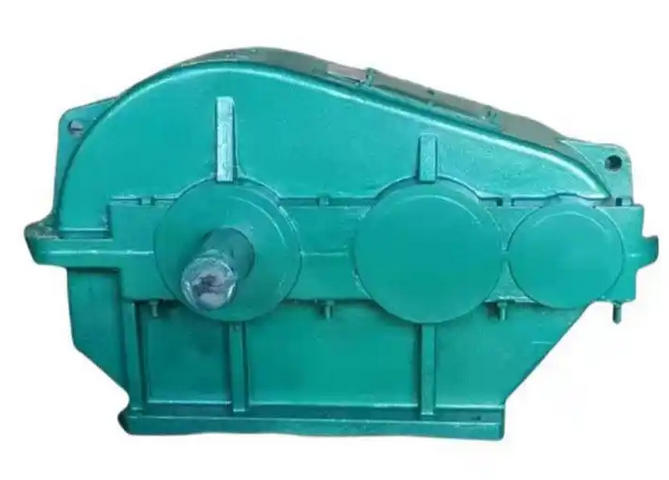
How to choose the appropriate center distance based on the working conditions of DBY hard tooth surface conical cylindrical gear reducer
The selection of center distance needs to be determined based on the load size, working conditions, and the bearing capacity of the reducer. The nominal center distance range of DBY hard tooth surface conical cylindrical gear reducer is 160-560mm, and commonly used specifications include 12 types such as 160, 180, 200, 224, 250, 280, 315, 355, 400, 450, 500, 560mm, etc.The selection principle is as follows:
1. Based on load power and torque: the larger the center distance, the stronger the load-bearing capacity. For example, the DBY200 model has a final center distance of 200mm and a rated input power range of 15~45kW, making it suitable for medium load equipment. If the actual load power is high (such as heavy load conditions in mines, crushers, etc.), a larger center distance model (such as DBY250 or above) should be selected to ensure safe operation.
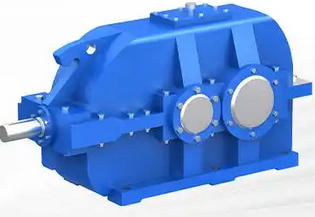
2. Combined with working condition correction factor: For light load and continuous stable operation (such as fans and conveyors), a smaller center distance can be selected; When overloaded, frequently started and stopped, or subjected to impact loads, it is necessary to increase the safety factor (1.5-2.0) and correspondingly increase the center distance to enhance the load-bearing margin.
3. Matching input speed and transmission efficiency: The maximum speed of the input shaft of the reducer is ≤ 1500r/min, and the circumferential speed of the gear is ≤ 20m/s. In high-speed applications, increasing the center distance appropriately can help reduce tooth contact stress and extend the lifespan.
4. Reference standards and series selection: DBY series is designed according to JB/T9002-1999 standard. It is recommended to prioritize selecting from standard specifications to avoid risks and cost increases caused by non-standard design.
Related News