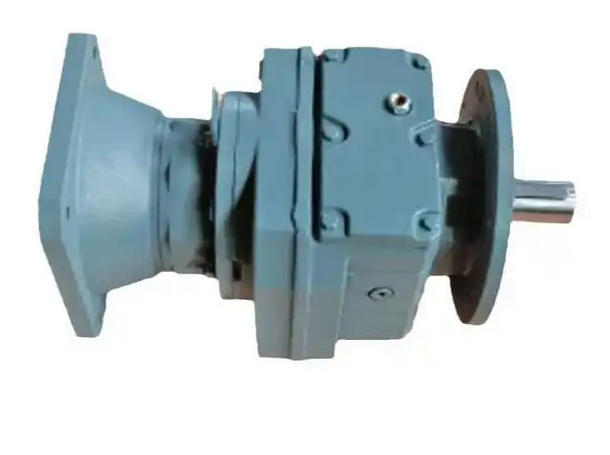


Operation Guide of Field Balancing for Abnormal Vibration Elimination of ZJY212 20 S Shaft Mounted Reducer
- Preparation Tools and equipment: Prepare vibration analyzer, trial weights of various specifications, electronic phase meter, spanners, marking pens, lockout tagout devices and other supplies. Safety precautions: Shut down the unit and cut off power supply, implement lockout and tagout procedures. Do not start operation until the equipment comes to a complete standstill. Equipment inspection: Eliminate non-unbalance faults such as bearing damage, loose fasteners and misalignment.
- Initial Vibration Measurement Mount vibration sensors on the reducer bearing housing or positions close to the rotor. Sensors shall generally be fitted in both horizontal and vertical directions. Start the equipment to operating speed. Use the vibration analyzer to record initial vibration data, including amplitude and phase angle.
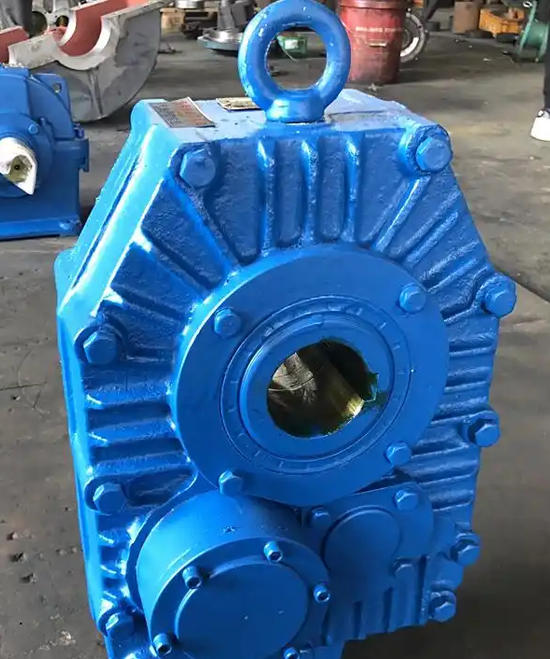
- Data Analysis Adopt the vibration analyzer to identify whether the dominant frequency is 1× rotational frequency, so as to confirm static unbalance or dynamic unbalance. Determine the type of unbalance. For rotors with a large length-to-diameter ratio, two-plane balancing may be required.
- Trial Weight Method (Single-plane Balancing Example) Trial weight selection: The mass of trial weight is normally 10%–30% of the estimated rotor unbalance amount. Trial weight installation: Fix the trial weight at any angular position on the rotor, for instance at the 0° position. Restart the equipment and measure vibration values, then record the corresponding amplitude and phase angle.
- Correction Quantity Calculation Calculate the mass and mounting position of correction weights via vector analysis or balancing software. With the original vibration vector and vibration vector after trial weight addition, the influence vector of the trial weight can be derived to obtain the required correction weight.
- Correction Weight Installation Install precision correction weights at the designated angle according to calculation results, and ensure firm fastening.
- Verification and Fine Tuning Restart the equipment and measure vibration readings. Balancing is accepted if the vibration amplitude falls below the corresponding grade specified in ISO 1940 standard. If not, repeat procedures of trial weight addition, calculation and weight installation until vibration meets requirements. Document vibration data before and after correction, as well as weight position and mass, and generate a report for filing.
Related News