
The decisive role of the material and heat treatment of the inner gear ring of the cutting machine reducer in its lifespan
1、 Material selection: laying the foundation for performanceThe material of the internal gear ring is the cornerstone of its performance, and different steels can achieve a performance leap from soft tooth surface to hard tooth surface through heat treatment, to adapt to the harsh working conditions of the cutting machine.
1. Alloy impregnated carbon steel (preferred for hard tooth surfaces)
Representative grades: 20CrMnTi, 20CrNiMo, 18CrNiMo7-6
Core advantage: This is the standard material for heavy-duty and high impact working conditions. Through carburizing and quenching treatment, an ideal structure of "external hardness and internal toughness" can be achieved: the tooth surface hardness is as high as 58-62HRC, with extremely strong wear resistance and contact fatigue resistance; The core maintains high toughness and can effectively absorb the impact load generated by frequent starting and stopping of the cutting machine and cutting of wood, preventing tooth breakage.
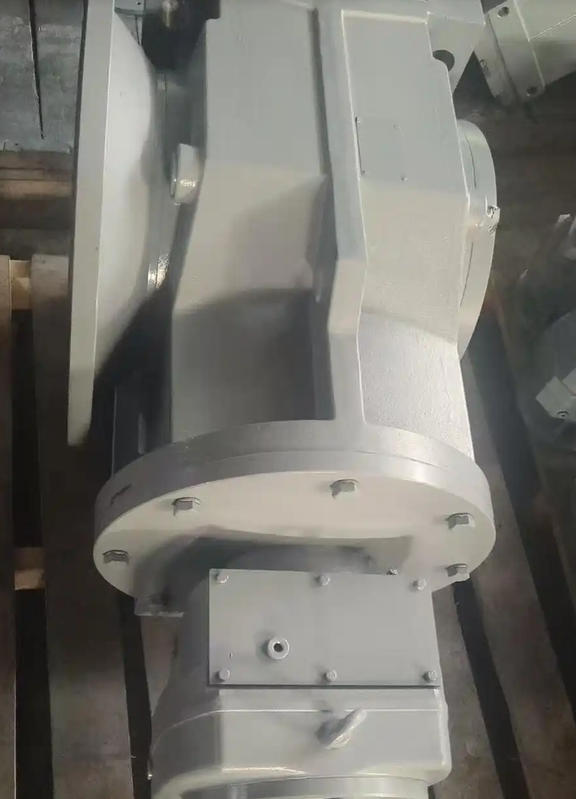
Applicable scenarios: Hard tooth planetary reducers with high load and continuous operation are the key to ensuring the long-term stable operation of the cutting machine.
2. Alloy quenched and tempered steel (medium and heavy-duty alternative)
Representative grades: 40Cr, 42CrMo, 35CrMo
Core advantages: Strength and toughness superior to ordinary carbon steel, hardness can reach 240-280HBW after quenching and tempering, and surface quenching can reach 50-58HRC. Its comprehensive mechanical properties are good, and its cost is relatively low compared to alloy carburizing steel.
Applicable scenarios: General gearboxes for medium to heavy-duty and medium speed applications. For cutting machines with relatively stable loads and less frequent impacts, they can be used as an economical choice.
3. High quality carbon structural steel (light load/low speed)
Representative grade: 45 steel
Core advantages: Low cost and good processability. But the hardness and strength are limited, with a hardness of only 220-250HBW after quenching and tempering.
Applicable scenarios: Only suitable for cutting machines with light loads, low speeds, and low requirements for accuracy and lifespan. Under heavy load conditions, tooth surface wear and pitting corrosion are prone to occur, resulting in a shorter lifespan.
2、 Heat treatment process: unleashing the potential of materials
Heat treatment is a crucial step in converting material properties into actual load-bearing capacity. The core goal for the internal gear ring of the cutting machine is to achieve a high hardness, high wear resistance surface, and a strong and tough core.
Related News