
How to choose a worm gear reducer suitable for your own equipment
When choosing a worm gear reducer, the key is to match the actual working conditions and performance requirements of the equipment. The following are systematic selection steps and core considerations to help you accurately select the most suitable model.1、 Clarify the core parameter requirements
1. Transmission ratio
Common range of reduction ratio: single-stage transmission ratio is 5:1 to 100:1, and special models may have higher ratios.
For example, if the motor speed is 1450rpm and the equipment requires 60rpm, the theoretical transmission ratio is 24.17, and the model with a standard value of 25:1 should be selected.
Attention: Standard gear ratios should be preferred as non-standard customization may increase costs and potentially reduce efficiency.
2. Torque requirements
Torque represents the "load-bearing capacity" of the gearbox, which must meet the maximum load of the equipment and leave a margin.
Actual required torque=load torque x safety factor (usually taken as 1.2-1.5).
When selecting, ensure that the rated torque of the reducer is equal to or greater than the calculated torque to avoid overload damage caused by "small horses pulling large vehicles".
The temperature resistance of materials should be considered in high temperature or heavy load environments (such as cast iron with a temperature resistance of 200 ℃ and stainless steel with a temperature resistance of up to 300 ℃).
3. Input power and efficiency
The input power should match the power of the driving motor and should not be overloaded.
The efficiency of worm gear transmission is relatively low, generally ranging from 70% to 90%. The higher the transmission ratio, the lower the efficiency.
It is recommended to choose models with an efficiency of ≥ 85% for continuous operation equipment to save energy and reduce consumption.
2、 Combining working conditions with environmental conditions
1. Installation method
Horizontal, vertical, flange installation, or hollow shaft installation affect lubrication distribution and stress state in different ways.
Special attention should be paid to whether the lubricating oil is sufficient for vertical installation to prevent early wear caused by poor lubrication.
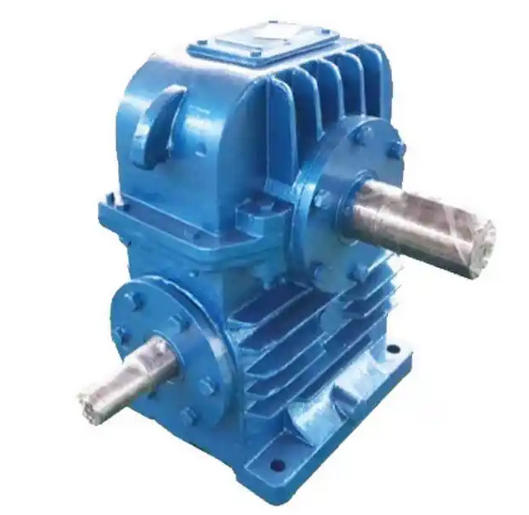
The vertical worm gear reducer has a compact structure, suitable for equipment layouts with limited space, and has good self-locking performance.
2. Working environment
Temperature: The normal operating environment is -10 ℃~40 ℃. If it exceeds this range, high and low temperature resistant accessories should be selected.
Humidity and corrosion: For environments with high humidity and dust, it is recommended to use stainless steel materials (such as WD series) or install protective covers.
Protection level: IP54 or above should be selected for outdoor or harsh environments to prevent foreign objects from entering or oil leakage.
3. Operating mode
Continuous operation, intermittent operation, or frequent start stop can affect the fatigue resistance of bearings and worm gears.
Frequent start stop conditions require strengthened structural design to enhance durability.
Related News