
Overload Protection and Motor Synergy: The Safety Barrier of Rice Milling Machine Gearbox
1、 The core role of overload protection mechanismDuring the operation of the rice mill, the load may suddenly increase sharply due to excessive feeding, mixing of hard impurities (such as stones, metals) in the material, or internal jamming of the equipment. If there are no effective protective measures, the huge torque generated by this overload will be directly transmitted to the reducer, which can easily cause serious faults such as gear tooth breakage, shaft breakage, or motor burnout.
The function of the overload protection device is to intervene in a timely manner when this line of defense is breached. Taking modern reducers with overload protection function as an example, they are usually designed with precise mechanical linkage structures (such as spike ball beads, joint control gear rings, winding boxes, and other components) inside. When the transmission torque exceeds the preset safety threshold, these components will quickly respond, causing the transmission joint to automatically disengage or produce elastic deflection, thereby cutting off or buffering excessive torque transmission, achieving physical protection of the core components of the reducer and the motor.
2、 Collaborative protection with motors
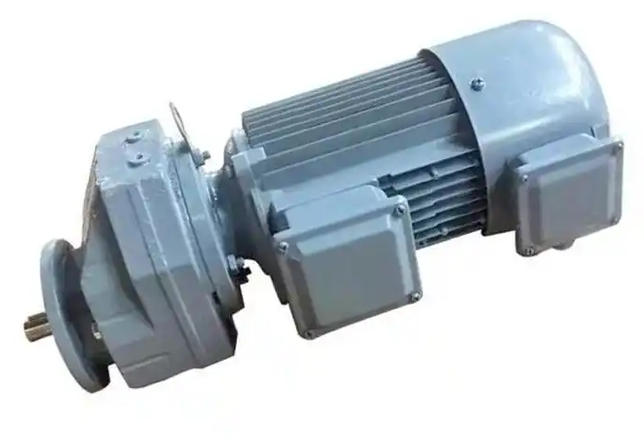
Overload protection does not operate in isolation, it forms a collaborative protection system with the motor:
Quick response and alarm: The advanced overload protection structure can trigger the disconnection protection while also outputting alarm signals through devices such as trigger switches. This enables the control system to immediately detect abnormalities and synchronously issue shutdown or load reduction commands to the motor, preventing the motor from overheating and burning out due to prolonged operation in a locked rotor state.
Dynamic torque adjustment: Some overload protection mechanisms allow for dynamic adjustment of the torque setting value that triggers protection based on actual operating conditions, such as the model of the rice mill and the characteristics of the processed material. This flexibility ensures that the motor and gearbox can work together within the optimal safety range at different stages of operation.
Easy to maintain and restore: Excellent overload protection design will not cause complete damage or difficulty resetting of the device after triggering. For example, through the synergistic effect of the mainspring and connecting claw ears, elastic reset and auxiliary clamping can be achieved after overload relief, avoiding complete disconnection and greatly simplifying the subsequent troubleshooting and maintenance process.