
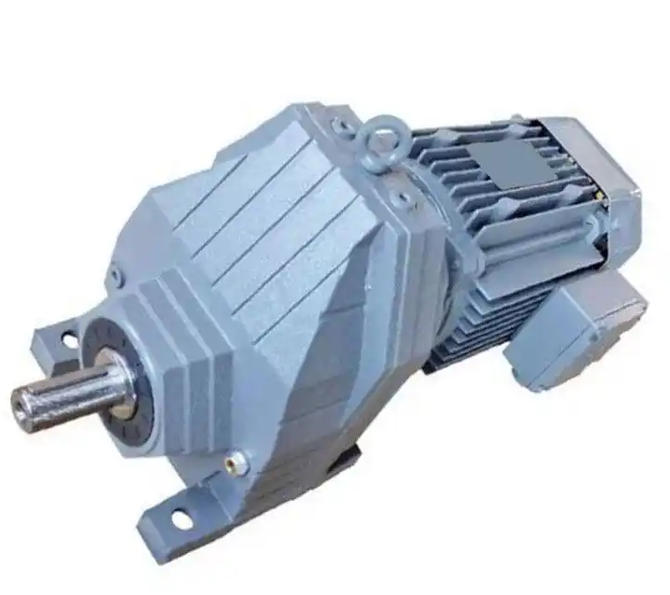
Is gear selection always prone to pitfalls? Don't just focus on the modulus, you must know these 4 'invisible pits'!
The gear module is indeed the core parameter that determines the bearing capacity of gears, but in practical engineering selection, if we only focus on the module, it is easy to step on the manufacturing cost, transmission stability, and later maintenance. Here is a comprehensive analysis of the relationship between gear modulus and bearing capacity, as well as a guide for selecting and avoiding pitfalls:1、 Core principle: Why does modulus determine bearing capacity?
The gear module (m) is a fundamental parameter that determines the size of gears and directly reflects the size of the teeth.
There is a positive correlation between size and strength: the larger the modulus, the thicker and higher the tooth thickness, as well as the bending section modulus of the tooth root, will all increase accordingly.
Stress reduction: According to the formula for gear bending strength, increasing the modulus can effectively reduce the bending stress at the tooth root, allowing the gear to withstand greater loads, thus increasing its load-bearing capacity.
2、 Selection and Avoiding Pits Guide: Understanding Modulus Without Stepping on Thunder
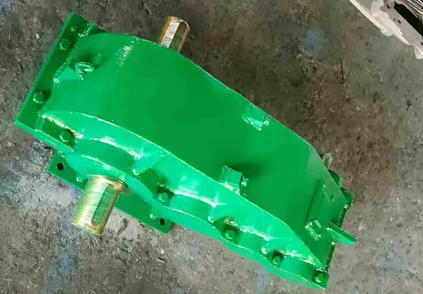
Although large modulus can improve bearing capacity, when selecting, it is necessary to comprehensively weigh the following dimensions that are prone to pitfalls:
1. Avoid the trap of "non-standard modulus"
Modulus is not just a geometric parameter, it actually represents the specific cutting tool used during manufacturing (such as a hobbing tool).
Suggestion for avoiding pitfalls: It is necessary to prioritize using the "priority series" in national standards (GB/T 1357) or ISO standards (such as 1, 1.25, 1.5, 2, 2.5, 3, 4, 5, 6, etc.). If non-standard modules (such as m=1.13) are designed to fit the center distance, it will result in the inability to use existing tools, requiring thousands of dollars to customize tools and waiting for weeks of delivery time, significantly increasing manufacturing costs and risks.
2. Be wary of the negative effects brought by "large modulus"
The larger the modulus, the better. Blindly increasing the modulus will bring a series of side effects:
Unstable transmission and noise: The larger the modulus, the larger the radial size and weight of the gears, and the higher the moment of inertia, which is not conducive to high-speed operation; At the same time, machining errors will be amplified, resulting in increased meshing impact and increased transmission noise.
Suggestion for avoiding pitfalls: Follow the principle of "selecting large modules for heavy loads and low speeds, and selecting small modules and multiple teeth for high speeds and light loads". For example, heavy-duty equipment such as cranes can use large modules with m=8-12, while high-speed light load equipment such as car gearboxes should use small modules with m=2-5.
3. Neglecting the coordination between the number of teeth and the degree of coincidence
The bearing capacity not only depends on the modulus, but also on the fit of the number of teeth (z).
Suggestion for avoiding pitfalls: Increasing the number of teeth can improve the coincidence and make the transmission smoother. However, it should be noted that increasing the number of teeth will result in a decrease in modulus, thereby reducing the strength of a single tooth, while keeping the diameter of the dividing circle constant. In addition, the number of teeth for standard spur gears should be ≥ 17 to avoid root cutting, and the recommended number of teeth for small gears is 20-40 to balance strength and smoothness.
4. Ignore post maintenance and spare parts procurement
When selecting, it is necessary to consider the maintenance needs of the equipment after five years or even longer.
Suggestion for avoiding pitfalls: Adhere to using the standard module of the priority series. If obscure or non preferred series of modules are used, in the event of equipment damage in the future, end users will find it difficult to find matching replacement gears in the market, resulting in prolonged machine downtime and potential hidden losses that may far exceed the value of the machine itself.
Related News