
How to avoid emulsification of lubricating oil in WPA135-20-A worm reducer
When the WPA135-20-A worm gear reducer operates in high temperature and high humidity environments, lubricating oil emulsification is a common and critical issue that affects equipment life. It is necessary to coordinate prevention and control measures from three aspects: blocking water intrusion, controlling temperature difference condensation, and improving the anti emulsification performance of oil products, in order to effectively avoid emulsification.1、 Strictly control the invasion of external moisture and cut off the source of emulsification
Moisture is the primary factor causing lubricant emulsification, especially in humid environments, and it is important to strengthen the maintenance of the sealing system
Regular inspection of seals: Inspect the skeleton oil seal of the bearing end cover every 6 months to ensure that the lip is not aged or damaged, and ensure correct direction and coaxiality during reassembly; The sealing gasket of the box joint surface is replaced every year, and the bolts are evenly tightened diagonally to prevent loosening and water leakage.
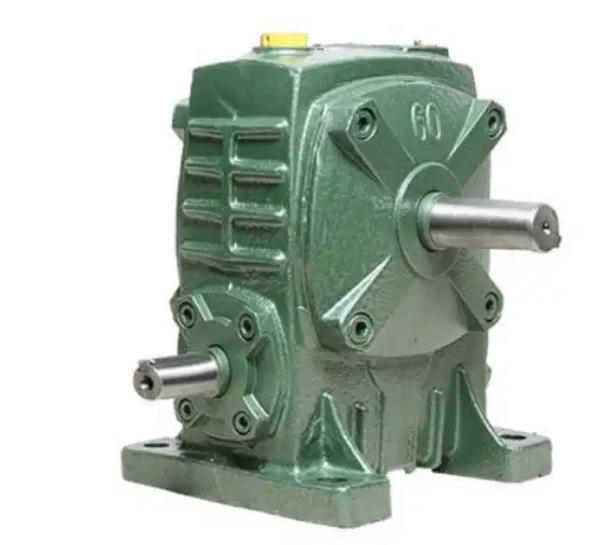
Optimize breathing valve management: Clean the breathing valve filter every 3 months to remove oil and dust; Install rain and dust proof breathing valves in high humidity or outdoor environments to prevent humid air from entering the interior of the box.
Standardized refueling operation: After maintenance, the condensed water inside the box must be wiped dry before installation; Before refueling, confirm that the lubricating oil is not damp, the tools are dry and free of water, and it is strictly prohibited to work with water; Tighten the oil plug promptly after refueling to prevent leakage.
Improve installation environment: Avoid installing the gearbox in low-lying or damp areas, and the ground should be treated with moisture-proof measures; Install a rain cover for outdoor use to prevent water vapor from seeping through the micropores of the cast iron box.
2、 Reduce internal condensation water generation and control temperature difference changes
Frequent start stop or poor heat dissipation can cause large fluctuations in oil temperature, resulting in the formation of condensed water, which in turn can cause emulsification:
Stable operating conditions: Try to minimize short-term frequent starts and stops to avoid sudden increases and decreases in oil temperature; If intermittent operation is required, it is recommended to lower the oil temperature to below 40 ℃ before shutting down to reduce the risk of negative pressure moisture absorption.
Improve heat dissipation efficiency: Regularly clean the oil and dust on the heat dissipation fins of the box to maintain good heat dissipation; In poorly ventilated workshops, forced cooling fans can be installed to control the oil temperature between 60-80 ℃ and not exceed 90 ℃.
Installation of anti condensation device: In humid environments, a small moisture-proof heater can be installed on the top of the reducer. During shutdown, it is powered on for insulation to keep the temperature inside the box slightly higher than the outside, preventing water vapor condensation; Or install an oil and gas separation device to reduce moisture retention.
3、 Select high emulsion resistant lubricating oil to enhance the performance of the oil itself
The quality of base oil and additive formula directly affect the anti emulsification ability:
Choose specialized worm gear oil: It is recommended to use N320 or N460 extreme pressure gear oil, or synthetic worm gear oil specified by the manufacturer, which has excellent anti emulsification and anti rust properties.
Priority should be given to oil products containing composite emulsifiers: lubricating oil with deeply refined base oil and added demulsifier can effectively promote oil-water separation, and is not easily emulsified even with a small amount of water ingress.
Regularly check the oil quality status: check the oil color (normally light yellow to brown) and transparency through the observation window; If it appears milky white, cloudy, or has a sour taste, it indicates that it has been emulsified and deteriorated, and should be replaced in a timely manner.
Establish a regular oil change mechanism: In harsh environments, it is recommended to check the oil quality every 500 hours and replace the lubricating oil every 1000 hours to prevent oxidation and pollution accumulation.