
How to reduce the no-load loss of the gearbox and minimize unnecessary power consumption
The losses of the gearbox under no-load conditions (i.e. useless power consumption) mainly come from gear meshing friction, rolling bearing resistance, oil agitation and wind resistance, as well as friction of seals. To effectively reduce these no-load losses, optimization can be carried out from the following core dimensions:1. Optimization of lubrication system
The selection and use of lubricating oil have a significant impact on no-load energy consumption:
(1) Selecting efficient lubricants: Using synthetic lubricants instead of traditional mineral oils can significantly improve antioxidant performance and thermal stability, thereby reducing internal friction losses. Practice has shown that replacing synthetic lubricants can improve transmission efficiency by 3% -5%.
(2) Adjusting viscosity and oil quantity: For gears operating at high speeds, gear oil with lower viscosity and better fluidity should be selected; At the same time, avoid lubricating oil that is too thick or overfilled, otherwise it will increase operating resistance and exacerbate oil agitation loss.
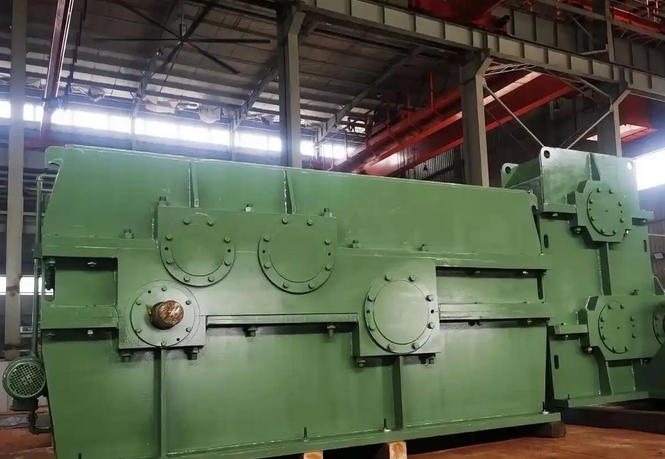
(3) Change of lubrication mode: if conditions permit, spray lubrication or oil mist lubrication can effectively reduce the amount of lubricating oil and the energy loss caused by oil stirring, instead of traditional oil bath lubrication.
2. Improvement of mechanical structure and machining accuracy
By improving the machining quality and assembly accuracy of components, physical friction can be directly reduced:
(1) Improving surface smoothness: Ultra precision machining of gear tooth surfaces and component contact surfaces (such as reducing roughness to Ra0.4 or even lower) can significantly reduce friction coefficient and improve heat generation.
(2) Optimizing component design: For example, in planetary gearboxes, appropriately shortening the length of the fit between the planetary gear inner hole and the pin shaft, or machining double flat on the pin shaft to increase oil storage space, can significantly reduce friction heating and temperature rise.
(3) Reasonably adjusting the clearance: Appropriately increasing the gear mesh clearance can reduce the frictional resistance on the tooth surface, which helps to improve the smoothness of operation and reduce no-load noise and temperature rise.
(4) Ensure precise alignment: During installation, use tools such as laser alignment instruments to calibrate the input/output shafts to avoid additional friction and shortened lifespan of the bearings caused by axis misalignment.
3. Intelligent control and selection matching
Reduce unnecessary energy consumption from the perspective of external control and system matching:
(1) Introducing frequency conversion control: Using intelligent frequency conversion control technology, the motor speed is automatically adjusted according to actual load changes to avoid energy waste caused by equipment running at full speed under no-load or light load conditions.
(2) Application predictive maintenance: Real time monitoring of equipment status using vibration analysis or infrared thermal imaging technology. If abnormal noise or sudden temperature rise is found, promptly investigate and handle potential faults (such as excessive bearing clearance, lubrication failure, etc.) to prevent an increase in hidden losses.
(3) Exploring new driving solutions: For specific high energy consuming industrial scenarios, cutting-edge technologies such as low-speed high torque permanent magnet direct drive systems can be considered to break the shackles of traditional driving modes and fundamentally achieve energy conservation and consumption reduction.