
How to Reduce the Noise Level of the R77-145.67-0.55KW Gear Reducer
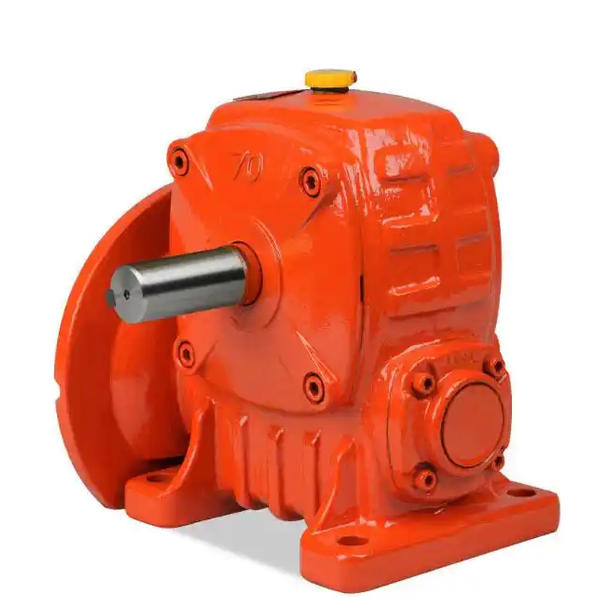
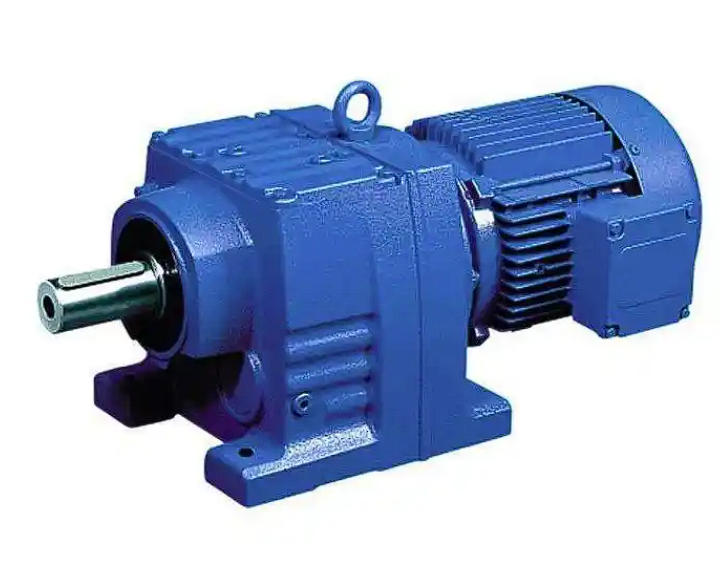
R77-145.67-0.55KW is a helical gear worm gear reducer (with a total reduction ratio of approximately 145.67 and a motor power of 0.55KW). Regarding the noise issue of this device, it is recommended to follow the principle of "from outside to inside, from simple to complex" for troubleshooting and handling, in order to avoid blind disassembly.The following are specific steps and solutions for noise reduction:
1、 Listen to the sound and identify the location, preliminarily locate the fault
Different noise characteristics correspond to different fault sources, and the direction can be preliminarily locked through auditory perception:
Sharp whistling sound: mostly caused by abnormal gear meshing status (such as tooth surface wear, excessive/insufficient meshing clearance, assembly misalignment).
Dull buzzing sound: commonly seen in bearing wear and damage, loose anchor bolts, and excessive coaxiality deviation between the motor and gearbox.
Periodic impact/clicking sound: mostly caused by gear tooth breakage, loose transmission flat keys, and eccentric coupling displacement.
Metal friction/screaming: mostly caused by lack of oil, deterioration of oil, and lubrication failure leading to dry grinding.
2、 External investigation and low-cost processing
1. Check installation and fastening
Tighten the foundation bolts: Check if the foundation bolts and end cap fixing bolts of the reducer are loose. Loosening can cause resonance and noise, but fully tightening and installing spring washers can effectively eliminate it.
Add shock-absorbing measures: If resonance occurs due to insufficient rigidity of the frame, shock-absorbing pads or shock-absorbing rubber can be installed between the reducer and the foundation to weaken vibration transmission.
2. Calibrate transmission alignment
Check the coaxiality between the motor and the reducer. If the coaxiality deviation is too large or the coupling is eccentric and misaligned, it will produce sustained vibration noise. Accurate re alignment is required to control the deviation within the allowable standard range (usually recommended to be controlled within 0.1mm).
Check the tension of the belt or chain to avoid excessive tensile stress and noise.
3、 Lubrication system troubleshooting and optimization
Poor lubrication is one of the core causes of excessive noise in gearboxes.
1. Check the oil level and quality
Oil level control: If the oil level is too high, it will cause excessive oil stirring noise, and if it is too low, it will cause dry grinding of the gears. The oil level should be controlled at the centerline of the oil gauge (or at 1/2~2/3 scale).
Oil quality inspection: Observe whether the lubricating oil is blackened, diluted, emulsified, or contains metal powder. If the oil deteriorates, it indicates that the interior has been worn out. The old oil should be thoroughly drained, and impurities and sludge inside the tank should be cleaned.
2. Accurate selection and oil change
Select specialized industrial gear oil according to the season and equipment operating conditions, and strictly prohibit the mixing of non-standard oil products.
For low-speed heavy load conditions, lubricating oil with high viscosity, high extreme pressure anti-wear formula can be used to ensure stable formation of oil film on the tooth surface and buffer meshing vibration.
4、 Internal mechanical fault handling
If the noise persists after external inspection and lubrication optimization, it is necessary to shut down the machine and inspect the internal components:
1. Gear body malfunction
Slight wear: The compatible extreme pressure gear oil can be replaced to allow the equipment to run in at low speed for a period of time, optimizing the meshing state.
Severe pitting, pulling, or tooth breakage: Such damage cannot be repaired by running in and requires direct replacement of the entire gear set to avoid the expansion of the fault.
Gap adjustment: recalibrate the gear meshing backlash to ensure even contact marks on the tooth surface.