
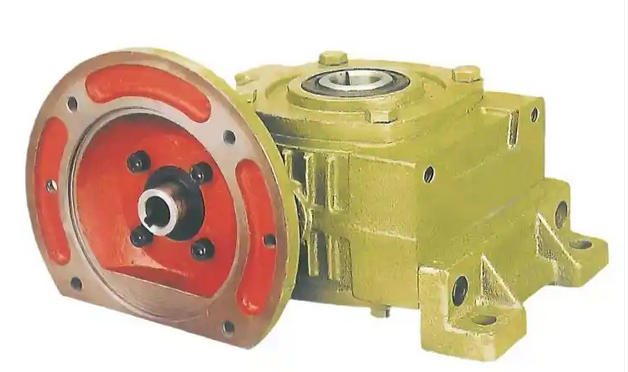
How to urgently handle the unstable operation of the gearbox
When the gearbox encounters an emergency situation of unstable operation, the primary principle is to immediately stop the machine to prevent the fault from expanding and causing permanent damage to the equipment or safety accidents. Subsequently, please follow the troubleshooting sequence of "external first, internal second, mechanical first, electrical second" for handling.Step 1: Emergency shutdown and safety confirmation
Immediate shutdown: Cut off the power and perform the LOTO procedure to ensure that the equipment cannot be accidentally started during maintenance.
Safe waiting: Do not touch the gearbox immediately after shutdown, wait for it to cool naturally to a safe temperature to avoid burns.
Preliminary observation: Observe for obvious abnormalities such as oil leakage, smoke, and component detachment from a safe distance.
Step 2: Systematic troubleshooting
Under the premise of ensuring safety, conducting investigations in the following order can efficiently locate the root cause of the problem.
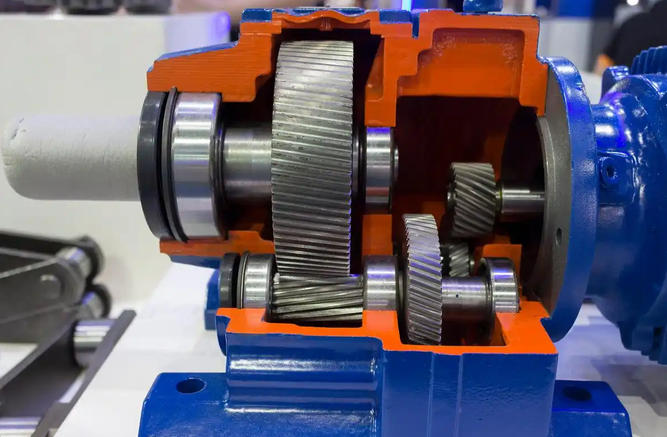
1. Check external installation and connection (most common reason)
Tighten the foundation bolts: Check if the fixing bolts of the reducer base and motor are loose. Use a torque wrench to tighten evenly in diagonal order.
Calibration coaxiality: Check the alignment between the motor shaft and the input shaft of the reducer, as well as between the output shaft of the reducer and the load end. Poor alignment is the primary cause of vibration and jitter. Radial and angular deviations should be strictly controlled within the allowable range in the equipment manual (usually ≤ 0.05mm).
Check the coupling: Check if the coupling is damaged, if the elastic components are aged or cracked, and if the connecting keys or tensioning sleeves are loose.
2. Check the lubrication system
Check the oil level and quality: Confirm whether the lubricating oil level is within the normal range through the oil window or dipstick. Observe the color of the oil. If the oil turns black, cloudy, emulsified, or has metal powder, it indicates that the lubrication has failed or there is internal wear, and it needs to be replaced immediately.
Confirm oil type: Check whether the type of lubricating oil/grease used meets the requirements of the equipment manual. Incorrect oil type can lead to poor lubrication and abnormal wear.
Check the sealing and breathable plug: Check whether the oil seal is aging and leaking oil, and whether the breathable plug is blocked. Blockage of the breathable plug can cause an increase in pressure inside the box, leading to oil leakage or seal failure.
3. Check the load and operating conditions
Verify load: Confirm whether the current load exceeds the rated torque of the gearbox. Long term overload or frequent impact loads can directly lead to unstable operation.
Check heat dissipation: Confirm whether the ventilation port and cooling fan of the gearbox are blocked by dust or debris. Poor heat dissipation can lead to high oil temperature, decreased viscosity, and increased wear.
4. Check the electrical and control system
Adjusting servo parameters: If the reducer is driven by a servo motor, excessive speed/position loop gain or incorrect load inertia ratio settings may cause mechanical resonance. You can try reducing the gain parameter appropriately and observe whether the jitter improves.
Check the encoder: Interference or poor connection of the encoder signal may also cause the control system to misjudge, resulting in unstable operation.