
If the meshing spots of the F series reducer are not qualified, how should they be adjusted
The core method for adjusting the non-conforming meshing spots of the F series reducer is to readjust the meshing backlash and contact spots of the gear pair, and optimize the assembly process. According to the specific situation of the equipment, the following measures can be taken:1. Precise adjustment of meshing state: Strictly readjust the meshing backlash and contact spots of bevel gear pairs or helical gear pairs according to technical specifications, ensuring that the contact area is ≥ 60% along the tooth length direction and ≥ 45% along the tooth height direction, achieving uniform contact.
2. Using red lead powder coloring inspection: Apply red lead powder to the gear tooth surface, observe the coloring distribution after operation to determine the contact area, and perform targeted grinding or adjustment on the poor contact area.
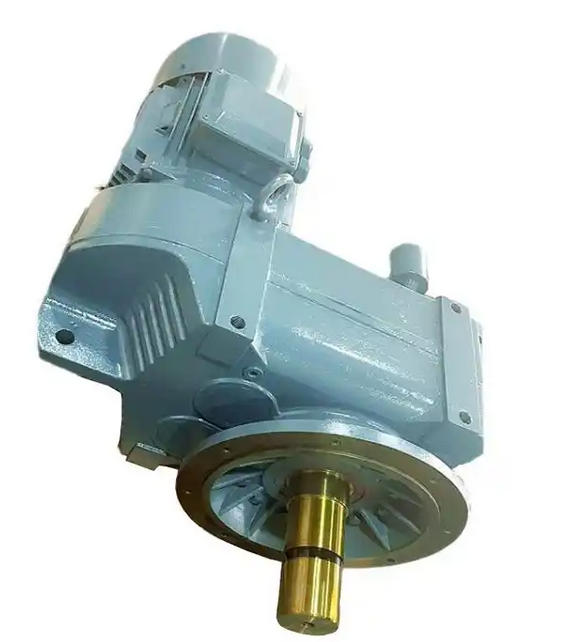
3. Optimize assembly process: Introduce digital assembly technology, such as using laser trackers to control the parallelism of the reference plane of the box (with an accuracy of 0.02mm/m), and using electronic torque wrenches to verify the tightening torque of key bolts (with an error controlled within ± 2%) to improve overall assembly accuracy.
4. Avoid repairing the casing: Due to the difficulty and high cost of secondary processing of the casing, priority should be given to compensating for errors by adjusting the gear axial position, replacing gaskets, or using a floating support structure, rather than repairing the casing.
5. Strengthen testing methods: In addition to conventional dial gauge testing, it is recommended to use a coordinate measuring machine to scan the reference surface of the box or use a gear testing center to comprehensively evaluate the assembly quality.