
What component faults may be causing the WB series micro cycloidal reducer to output non rotation or intermittent rotation
1、 Fault in input side power connection componentsInput shaft flat key/spline failure: The motor is idling but the input shaft of the reducer is not synchronized, resulting in obvious idle clearance on the input side and direct power interruption.
Coupling connection failure: elastic body fracture, bolt detachment, motor rotation but gearbox input shaft does not rotate at all, no power transmitted into the interior.
Deformation and wear of the input shaft keyway: Long term impact loads cause the keyway to slip, and the input shaft speed fluctuates with the load, resulting in intermittent idling.
2、 Eccentric transmission component malfunction
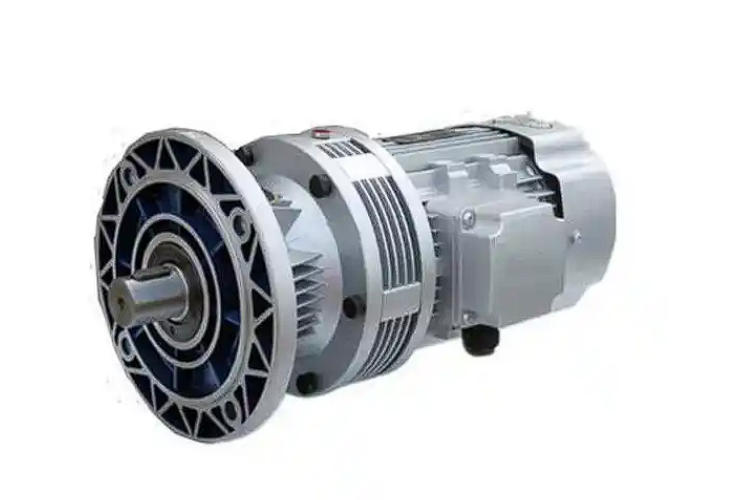
Damage to the arm bearing: pitting corrosion on the raceway, peeling off of the ball bearings or breakage of the cage, excessive clearance, asynchronous rotation of the eccentric sleeve, disruption of the revolution rhythm of the cycloidal wheel, fluctuating speed or even jamming.
Eccentric sleeve deformation and cracking: After being subjected to impact load, the eccentricity is misaligned, and the cycloid wheel cannot complete normal revolution, resulting in periodic lagging and intermittent rotation.
The lubricating grease of the rotating arm bearing dries up: the running resistance suddenly increases, and it stops directly after being loaded, and can barely rotate again when unloaded.
3、 Fault in the meshing pair between the cycloidal gear and the needle teeth
Severe wear/collapse of cycloidal gear teeth: The wear amount of the tooth surface is greater than 0.1mm, the pitting area exceeds 1/3, or local collapse occurs, with intermittent meshing and intermittent power transmission.
Needle pin/needle sleeve breakage and detachment: One or more needle pins break and get stuck in the meshing gap, causing the cycloid wheel to be directly stuck; Partial detachment of the needle gear sleeve can cause meshing slippage and intermittent output rotation.
Severe wear of the needle tooth shell and needle tooth hole: The wear of the needle tooth hole exceeds 0.03mm, the hole spacing error exceeds 0.06mm, the needle tooth positioning is offset, the meshing backlash is completely ineffective, and the speed continues to fluctuate or even stagnate.
4、 Fault in output power transmission components
The output column pin and pin sleeve are severely worn: the fit clearance is greater than 0.2mm, the power transmission lags and slips, and the speed drops sharply or even completely interrupts after being loaded.
Damage to output end bearings: excessive clearance of needle roller bearings, shattered rolling elements, stuck rotation of output shaft, and visible stuttering during manual turning.
Output shaft deformation/spline failure: The output shaft is bent due to radial impact, or the spline connected to the output end is worn flat and slips, resulting in abnormal power output on the load side.
5、 Other related component failures
Foreign objects entering the box: metal debris and assembly residue get stuck in the meshing gap between the cycloid wheel and the needle teeth, randomly causing jamming. After cleaning, the rotation returns to normal.
The lubrication system has completely failed: the lubricating oil has not been replaced for a long time, the oil level is severely insufficient, the internal parts are stuck due to dry friction, and after cooling down, they can briefly rotate again.