
What problems can be caused by incorrect motor rotation of BWED2718-289-2.2KW cycloidal pinwheel reducer
BWED2718-289-2.2KW is a two-stage horizontal cycloidal pinwheel reducer. Incorrect motor rotation can not only cause the load end to deviate from the process requirements, but also cause irreversible damage to the internal transmission components, sealing system, and overall stability of the reducer. The specific problems are as follows:1. Internal transmission components are subjected to force overload, accelerating wear or damage
The meshing transmission design of the cycloidal pinwheel reducer has directional force characteristics, and the contact stress between the cycloidal gear and the needle teeth, as well as the bearing direction of the needle roller bearing, are matched with the specified direction of rotation. When the steering is incorrect, the direction of force on the transmission components will reverse, and the contact stress on the meshing surface will exceed the design threshold, resulting in early pitting and peeling of the cycloid gear teeth. The wear of the needle roller bearing raceway will intensify, and in severe cases, faults such as cycloid wheel fracture and needle tooth deformation may occur, greatly shortening the service life of the gearbox.
2. Sealing system failure leading to oil leakage fault
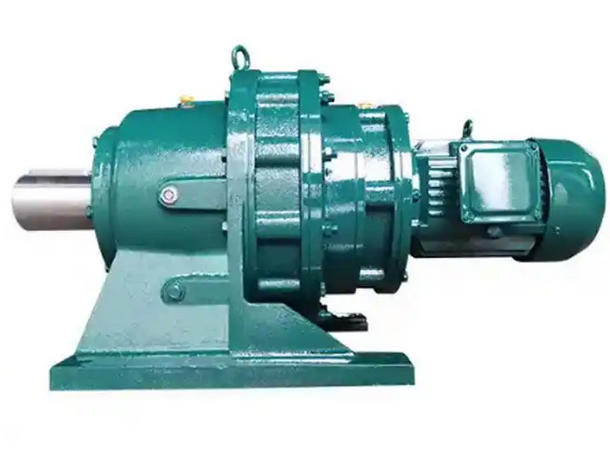
The output shaft end seal (skeleton oil seal) of the reducer is a one-way anti reverse structure, and the lip direction matches the specified direction. It can prevent lubricating oil leakage through the centrifugal force and lip fit during rotation. Wrong steering can cause the oil seal lip to align with the shaft in the opposite direction, making it unable to effectively grip the shaft surface. At the same time, the stirring direction of the internal lubricating oil changes, leading to an abnormal increase in oil pressure and ultimately causing rapid aging of the oil seal and tearing of the lip, resulting in sustained oil leakage.
3. Abnormal operation of load side equipment poses a safety hazard
If the reducer is already connected to the load equipment (such as conveyor, mixer, elevator), the wrong direction of rotation will directly cause the load end to run in the opposite direction, which violates the process operation requirements. For example, the reverse rotation of the elevator can cause material to fall, the reverse rotation of the conveyor can cause material accumulation and blockage, and the reverse rotation of the mixer can cause uneven force on the mixing blade and deformation; For working conditions with self-locking requirements, incorrect steering may also cause the equipment to lose its self-locking ability, leading to safety accidents such as heavy objects slipping off.
4. Increased vibration and noise, decreased overall stability of the machine
When the steering is incorrect, the meshing clearance of the internal transmission of the gearbox cannot match the direction of force, resulting in strong impact vibration during operation, accompanied by obvious metal impact or whistling sounds. Vibration will be transmitted to the machine base and foundation bolts, causing bolt loosening and displacement of the shim, thereby damaging installation accuracy; Long term abnormal vibration can also cause secondary faults such as increased bearing clearance and bent output shaft, forming a vicious cycle.
5. Lubrication effect decreases, local temperature rise is too high
The circulation path of lubricating oil inside the reducer and the mixing method of the oil pool are all adapted to the specified direction. Incorrect direction will disrupt the normal circulation of lubricating oil, resulting in insufficient lubrication of the meshing surface and bearing parts between the cycloidal gear and the needle teeth, leading to dry friction or semi dry friction. Local frictional heat cannot be carried away by the lubricating oil in a timely manner, which can cause a rapid increase in bearing temperature (exceeding 85 ℃), and the lubricating oil will deteriorate due to high temperature oxidation, further exacerbating component wear.