

Installation tutorial and precautions for vertical mixer reducer
Vertical mixers are widely used in industries such as chemical, food, pharmaceutical, and coating. The installation accuracy of the reducer directly determines the stability and service life of the equipment. Many devices have abnormal noises, shaking, oil leakage, and rapid wear in the later stage, which are caused by non-standard installation in the initial stage. Standardized installation process and core precautions for vertical mixer reducers.The first step is to check the accessories before installation. Before installation, carefully check whether the gearbox body, oil seal, and bolts are damaged, whether the internal lubricating oil is clean, and whether the accessories are complete; At the same time, clean the installation base of the equipment to ensure that the base is flat, free of debris and deformation, and to avoid tilting of the equipment after installation.
The second step is to accurately align and fix. Place the reducer steadily on the installation base, adjust the levelness, and ensure that the reducer is coaxial with the mixing spindle and motor, without offset or tilt. Subsequently, tighten the fixing bolts evenly and lock them diagonally to avoid equipment deformation and coaxiality deviation caused by unilateral force.
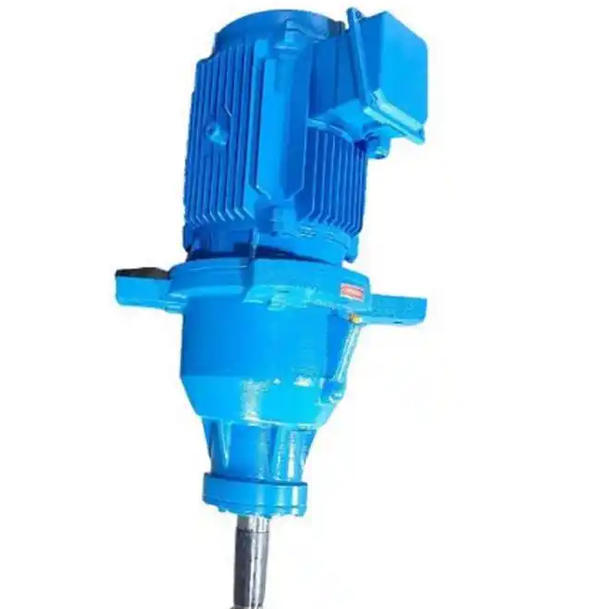
Step three, connect the transmission components. Install transmission accessories such as couplings and buffer pads to ensure tight connections, even clearances, and no compression or displacement of the buffer pads, providing shock absorption and buffering effects. Forced splicing and violent installation are prohibited to avoid deformation of accessories that may affect transmission accuracy.
Step four, add lubricating oil and debug the operation. After installation, add the corresponding type of gear oil according to the equipment standard and check that the oil level meets the standard. Run the equipment without load for 5-10 minutes, observe for any abnormal noise, shaking, oil leakage, abnormal temperature rise, etc. After the no-load is normal, test the machine with materials.
Core precautions: Ensure precise coaxiality throughout the installation process, which is the key to avoiding equipment failures in the later stages; It is prohibited to install with uneven base, loose bolts and defects; After installing the new equipment, it is necessary to change the oil for the first 300 hours of operation.
Related News